
Why Short Sprints Transform Football Fitness
Football fitness training plans work because match performance depends more on repeated short efforts than on endless distance running. A complete 2026 plan combines acceleration, strength, agility, a...
Why Short Sprints Transform Football Fitness
Football fitness training plans work because match performance depends more on repeated short efforts than on endless distance running. A complete 2026 plan combines acceleration, strength, agility, aerobic conditioning, mobility and recovery for players at every level, from grassroots football to elite academies. Most decisive actions last only a few seconds, yet players may repeat high-intensity runs throughout a 90-minute match. The Fédération Internationale de Football Association (FIFA) and the Union of European Football Associations (UEFA) both emphasize physical preparation, workload management and player welfare rather than one-size-fits-all conditioning. A useful weekly structure usually includes two strength sessions, two speed or football-conditioning sessions, one match, and at least one full recovery day. Position matters: a centre-back needs explosive duels, a winger needs repeated sprint capacity, and a goalkeeper needs lateral power. Start by tracking your sessions, keeping hard days hard and easy days genuinely easy.
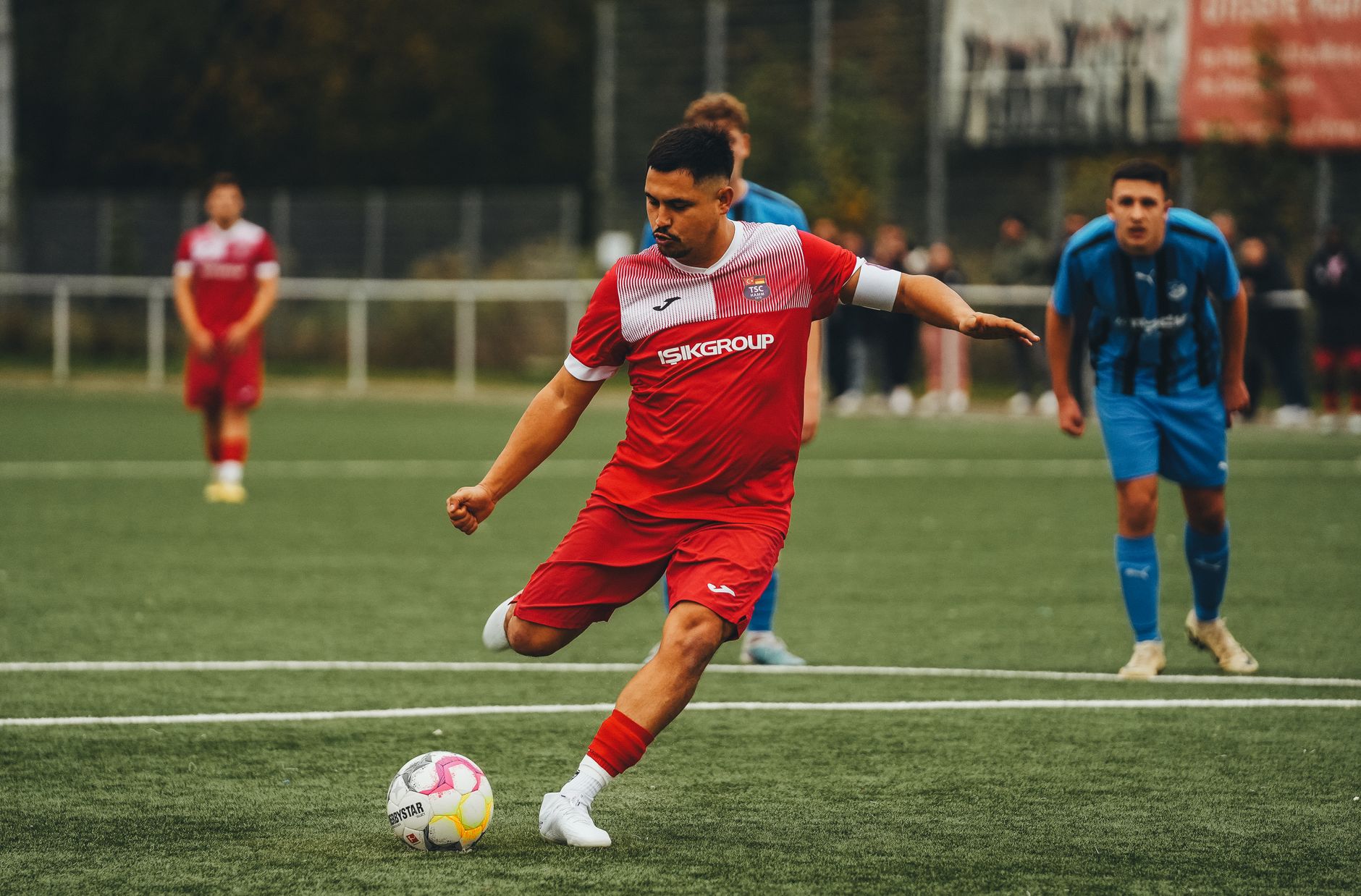
Photo by Omar Ramadan on Pexels
Football fitness is a slightly cruel subject. The ball does not care how impressive your gym numbers are, and your hamstrings are rarely interested in your motivational speech. A strong football fitness training plan must prepare you to accelerate, decelerate, change direction, recover between efforts and still make sensible decisions late in the match. Football Insights covers the tactical side of the game and the physical details that influence team performance, so this plan connects training choices with real match demands.
Want a clearer starting point for your weekly preparation?
Before 2025: How Did Football Fitness Training Work?
Before 2025, football conditioning commonly relied on distance running, basic gym exercises and repeated shuttle tests, but modern practice increasingly favors position-specific, football-relevant workloads. Coaches still use aerobic intervals and traditional strength work, yet GPS systems, heart-rate monitors and wellness questionnaires now help measure whether players are ready for another demanding session. The main change is not that old methods were useless; it is that coaches can now ask whether a drill transfers to match actions.
For decades, a typical pre-season might involve long runs around a pitch followed by sprints until everyone looked personally offended by grass. That approach developed general endurance but often neglected braking mechanics, hamstring strength and the repeated accelerations seen in matches. Research summarized by the FIFA Training Centre supports a more integrated approach in which technical actions, tactical decisions and physical stress appear together. A player who can run 10 kilometres but cannot decelerate safely is not fully prepared; he is simply tired in a measurable direction.
A practical football fitness training plan should therefore include these foundations:
- Maximum-speed exposure, usually through short runs with complete recovery.
- Repeated sprint ability, using controlled work-to-rest ratios.
- Lower-body strength, including squats, split squats and posterior-chain exercises.
- Change-of-direction technique, especially braking before cutting.
- Aerobic conditioning to improve recovery between high-intensity actions.
- Mobility, sleep and nutrition to support adaptation.
The useful distinction is between capacity and availability. Capacity means what you could do on your best day; availability means what you can safely do this week after school, work, travel, matches and the occasional heroic decision to play five-a-side in old boots. Your plan must serve the second number.
To understand how tactical roles shape conditioning, explore this [Internal Link: position-specific football training guide] alongside the physical schedule.
What Changed in the 2026 Football Fitness Shift?
The 2026 shift is toward individualized load management, integrated drills and better recovery decisions rather than simply adding more running. Players now need to manage acceleration count, high-speed distance, perceived exertion and muscle soreness across the week. The practical result is fewer meaningless conditioning sessions and more carefully timed work that matches the player’s position, match calendar and injury history.
A midfielder may cover significant total distance while repeatedly accelerating to support both attack and defense. A winger may perform fewer total actions but reach higher speeds during overlapping runs, while a centre-back may need powerful five-metre bursts and physical duels. The Premier League and UEFA Champions League demonstrate this variety clearly: elite football is not one athletic event but a collection of different repeated tasks.
One useful 2026 principle is to separate three training targets:
- Mechanical output: Can you produce force, accelerate and brake with control?
- Metabolic recovery: Can your heart rate and breathing settle between efforts?
- Decision quality: Can you pass, scan and choose correctly while fatigued?
Many players train the second target and neglect the first and third. They become excellent at suffering in a straight line, which is admirable but not particularly useful when an opponent changes direction. Include the ball in some conditioning drills, but do not let technical complexity hide poor running mechanics.
A simple session could contain four blocks:
- Warm-up: 10–15 minutes of jogging, mobility and progressive accelerations.
- Speed: 6–8 runs of 10–20 metres with 60–90 seconds of recovery.
- Football conditioning: 4–6 small-sided games lasting 2–4 minutes.
- Cool-down: easy movement, breathing and light mobility.
After several weeks, increase only one variable at a time: repetitions, distance, intensity or reduced recovery. Increasing all four is how a modest training week becomes a medical anecdote.
See how workload connects with match preparation in this [Internal Link: football match fitness and recovery checklist].
How Should Players Build Strength, Speed and Agility?
Players should build strength with two weekly sessions, develop speed through low-volume high-quality sprints, and train agility using deceleration and reactive direction changes. A balanced football fitness training plan prioritizes movement quality before fatigue, because poor technique under load increases risk without guaranteeing better performance.
Strength training should cover the major movement patterns rather than chase bodybuilding fatigue. A beginner can use goblet squats, reverse lunges, Romanian deadlifts, push-ups, rows and calf raises. An experienced player may progress to front squats, trap-bar deadlifts, Bulgarian split squats, Nordic hamstring exercises and loaded jumps, provided a qualified coach supervises technique. The FIFA 11+ injury-prevention programme is also worth considering as a structured warm-up option, particularly for amateur teams.
A useful strength session might look like this:
- Trap-bar deadlift: 3 sets of 4–6 repetitions.
- Rear-foot-elevated split squat: 3 sets of 6–8 per leg.
- Nordic hamstring curl: 2–3 sets of 4–6 controlled repetitions.
- Single-leg calf raise: 3 sets of 10–15 per side.
- Push-up or bench press: 3 sets of 6–10.
- Row variation: 3 sets of 8–12.
- Copenhagen plank: 2 sets of 20–30 seconds per side.
Rest two to three minutes between demanding lower-body sets. The goal is force production, not collecting exhaustion like loyalty points. For speed, use full recovery; six technically sharp 15-metre sprints are usually more valuable than twenty exhausted efforts with collapsing posture. For agility, teach the braking step first: lower the center of mass, place the foot under control and push away in the new direction.
One important edge case deserves attention. Players returning from a hamstring problem should not jump directly from jogging to maximal sprinting; they need progressive exposure to faster running, often over several sessions, with soreness and next-day function monitored. If sharp pain, swelling or altered movement appears, stop and seek medical assessment rather than negotiating with the injury like a desperate transfer agent.
Ready to turn these principles into a repeatable routine?
What Does a Weekly Football Fitness Training Plan Look Like?
A weekly football fitness training plan should place high-intensity speed, strength and match work on separate but coordinated days, with at least one genuine recovery period. For a player with a Saturday match, a practical structure is heavy training early in the week, tactical sharpness late in the week, and reduced volume before kickoff.
Sample weekly schedule for a Saturday match
| Day | Main focus | Suggested content |
|---|---|---|
| Monday | Recovery | 20–30 minutes easy cycling or walking, mobility, hydration |
| Tuesday | Strength and acceleration | Lower-body strength, 6–8 short sprints, technical work |
| Wednesday | Aerobic football conditioning | Small-sided games, passing under fatigue, moderate running |
| Thursday | Speed and power | Jumps, change-of-direction drills, 10–20 metre sprints |
| Friday | Pre-match activation | Mobility, rondos, set pieces, 3–5 relaxed accelerations |
| Saturday | Match | Warm-up, competition, post-match recovery |
| Sunday | Rest or light movement | Walking, mobility and sleep-focused recovery |
The schedule changes when the match is on Wednesday, when travel is involved or when a player is returning from injury. A team playing two matches within seven days should reduce gym volume and preserve intensity, because the objective becomes freshness rather than adaptation. According to the American College of Sports Medicine, exercise programming should account for frequency, intensity, time and type; football adds the important question of whether the player can perform the work repeatedly without losing coordination.
Use the talk test, session rating of perceived exertion and morning wellness notes together. A simple workload estimate is session duration multiplied by perceived exertion on a 1–10 scale. For example, 75 minutes at an effort of 7 produces 525 arbitrary units. The number is not a medical diagnosis, but a sudden jump from 400 to 800 should prompt discussion rather than celebration.
A contrarian point: the hardest session is not always the most valuable session. If Tuesday’s training makes Thursday’s sprint mechanics sloppy and Saturday’s legs heavy, the extra volume has reduced the week’s total quality. Football fitness improves through recoverable stress, not punishment with a stopwatch.
For more practical planning, review this [Internal Link: football recovery, sleep and nutrition routine].
How Should Training Change by Position?
Training should reflect the player’s repeated match actions: defenders need acceleration and duel strength, midfielders need recovery capacity and scanning under fatigue, attackers need speed and sharp changes of direction, and goalkeepers need explosive lateral movement. The same weekly plan can be shared by a squad, but the emphasis and volume should differ by position.
Centre-backs and full-backs
Centre-backs benefit from five- to ten-metre acceleration, jumping, upper-body strength and controlled deceleration. Full-backs usually need greater repeated sprint exposure because they may defend deep, overlap wide and recover over long distances. Include backward running, opening-the-hips drills and short reaction races rather than only forward sprints.
Midfielders
Central midfielders need the broadest physical profile. Their sessions should combine aerobic intervals, repeated accelerations, unilateral strength and technical actions performed after running. A useful drill might involve four 3-minute possession games with two minutes of recovery, but the coach should monitor whether passing accuracy collapses; fatigue that destroys decision quality is not automatically productive.
Wingers and forwards
Wingers and forwards require high-quality maximum-speed exposure, aggressive first steps and repeated curved runs. Use 10–30 metre sprints, angled approaches, finishing after acceleration and reactive 1v1 actions. Keep the volume modest enough to preserve speed; sprint training performed slowly is just expensive jogging.
Goalkeepers
Goalkeepers need lateral power, single-leg strength, landing mechanics, trunk control and short explosive movements. They should not simply complete the outfield player’s running plan with gloves added at the end. Include low-volume lateral bounds, reaction saves, controlled dives and recovery-to-feet drills, while still developing enough aerobic fitness to remain alert throughout the match.
The UEFA Training Ground provides useful examples of position-aware practice design. The deeper lesson is straightforward: measure what your position repeatedly demands, then train that demand while preserving the qualities that make you effective.
What Does This Mean for Recovery and Injury Prevention?
Recovery means restoring the physical and mental capacity required for the next quality session, not merely lying on a sofa and calling it regeneration. Players should prioritize sleep, sufficient calories, carbohydrate around demanding sessions, protein distributed across the day, hydration and gradual workload progression. Mobility can support movement comfort, but it cannot compensate for chronic under-fueling or five hours of sleep.
Aim for a consistent sleep window and treat late-night screen time as a training variable, especially before matches. A practical nutrition pattern includes carbohydrate before high-intensity work, protein after training and vegetables, fruit and fluids across the day. Exact requirements vary by body mass, climate and workload, so athletes with medical or dietary concerns should consult a sports dietitian rather than copying a professional player’s meal plan from social media.
Recovery monitoring is most useful when it detects a trend:
- Morning resting heart rate is unusually elevated for several days.
- Legs feel heavy during a normal warm-up.
- Sprint times decline despite maximum effort.
- Sleep quality worsens.
- Irritability and concentration problems appear.
- Joint pain changes running mechanics.
Do not confuse soreness with progress. Delayed muscle soreness after a new strength session can be normal, but sharp pain, swelling, instability or pain that changes your stride requires professional evaluation. The World Health Organization recommends regular physical activity while also recognizing that exercise should be appropriate to individual health status; football players are not exempt from that sensible warning.
An operational tip from years of watching players mismanage themselves: schedule the recovery day before you need it. Waiting until your body refuses to climb stairs is not a recovery strategy; it is a late administrative response.
Get a practical performance framework before your next training block.
What Are Three Predictions for Next Quarter?
The next quarter is likely to bring more individualized football fitness planning, greater use of wearable data and stronger integration between physical preparation and tactical training. The important trend will not be technology for its own sake; it will be whether coaches use information to reduce unnecessary load and improve the timing of high-quality work.
Prediction 1: More position-specific workload targets
Teams will increasingly track high-speed running, acceleration and deceleration by position rather than compare every player with one squad-wide target. A full-back and goalkeeper should not be judged by the same distance benchmark. This approach should make training more relevant, although poor data interpretation can still produce confident nonsense in a spreadsheet.
Prediction 2: More emphasis on availability
Coaches will value the number of training sessions and matches completed consistently, not only peak gym performance. A player who maintains 90 percent availability across a season may contribute more than a stronger player who repeatedly disappears with preventable overload problems. This does not mean avoiding intensity; it means earning intensity through progression.
Prediction 3: More combined technical and conditioning work
Small-sided games, transition drills and finishing under fatigue will continue to replace some isolated running. However, pure sprinting and strength training will remain necessary because football drills rarely provide enough maximum-speed exposure or controlled force development. The future is blended, not either-or.
These predictions are not guarantees, naturally. Football has a charming habit of making carefully prepared plans look foolish by the 17th minute. Still, the evidence points toward plans that are measurable, adaptable and connected to the actual demands of the player’s role.
How Can You Apply This Plan Safely?
Apply the plan by establishing your current fitness level, choosing two or three priorities, and progressing training gradually over four to six weeks. Record session duration, perceived effort, sprint quality, soreness and sleep, then adjust the next session when several warning signs appear. Beginners should start with lower volume, while experienced players can add intensity only after movement quality remains consistent.
A simple four-week progression could look like this:
- Week 1: Learn technique and complete moderate volumes.
- Week 2: Add one or two sprint repetitions or a small amount of load.
- Week 3: Maintain volume and increase quality, not exhaustion.
- Week 4: Reduce total volume by roughly 20–30 percent while preserving speed.
That fourth week is not laziness. It is where adaptation gets a chance to catch up with your ambition. Players should also test practical outcomes: Can you repeat accelerations? Do you recover between games? Does your passing remain accurate late in sessions? If the answer is no, adjust the plan rather than adding more suffering.
Football Insights can help connect physical development with team tactics, player statistics and 2026 tournament analysis. The most valuable plan is not the most brutal one; it is the one you can complete consistently, recover from properly and carry onto the pitch when the match becomes chaotic.
In short, train fast when speed is the goal, lift with control, condition specifically, recover deliberately and respect position demands. The glamorous part is the sprint; the professional part is knowing when not to sprint.
Want to continue building a smarter football routine?
Frequently Asked Questions
Q: What is a football fitness training plan?
A football fitness training plan is a structured programme that develops the speed, strength, agility, endurance, mobility and recovery needed for football. It usually combines gym work, sprinting, football drills and rest across a weekly schedule. A complete plan also reflects position, match frequency, age, training history and injury status. The objective is not simply to run farther; it is to repeat high-quality actions while maintaining technique and decision-making during a match.
Q: How do you start a football fitness training plan?
Start by recording your current weekly training, matches, sleep, soreness and perceived effort for seven days. Then select two priorities, such as acceleration and lower-body strength, and train them twice weekly with manageable volume. Use a 10–15-minute dynamic warm-up, begin sprinting with short distances, and increase only one variable at a time. Players with medical conditions, significant pain or recent surgery should obtain clearance from an appropriate healthcare professional before beginning intense training.
Q: What is the difference between football fitness and ordinary running?
Football fitness includes acceleration, deceleration, changes of direction, repeated sprints and skill execution, while ordinary running often moves continuously at a steady pace. A football match may require a player to alternate walking, jogging, sprinting, jumping and physical contact within short periods. Long runs can support general aerobic fitness, but they do not fully prepare the hamstrings, ankles or decision-making system for stop-start competition. Use steady running selectively rather than treating it as the entire plan.
Q: How many days per week should football players train?
Most amateur players can use three to five structured training days, including one match, depending on age, experience and recovery capacity. A common schedule includes two strength or power sessions, one or two football-conditioning sessions and at least one lighter or complete rest day. Players in a congested fixture period may need to reduce volume while preserving short high-quality efforts. If performance, sleep and mood deteriorate together, reduce workload and reassess instead of adding another session.
Q: What should you do if football training causes persistent pain?
Stop the aggravating exercise and seek assessment if pain is sharp, worsening, associated with swelling or changing your running pattern. Mild muscle soreness after unfamiliar strength work often improves within 24–72 hours, but persistent joint pain or repeated hamstring tightness needs professional attention. Do not mask symptoms with painkillers and continue maximal sprinting without advice. Record when the pain appears, which movement triggers it and whether it affects the following morning’s activity.
Q: Is gym training good for football players?
Gym training is beneficial when it improves force production, robustness, balance and power without compromising football practice or recovery. Useful exercises include split squats, trap-bar deadlifts, Romanian deadlifts, calf raises, rows, presses and Nordic hamstring work, adjusted to the player’s level. Heavy lifting is not automatically better, and excessive soreness before a match can reduce performance. Prioritize controlled technique, suitable loads and a qualified coach when learning complex exercises.
Q: How long does it take to improve football fitness?
Noticeable improvements in conditioning may appear within four to six weeks of consistent training, while substantial strength and speed gains commonly require several months. Beginners often progress quickly because their bodies respond to basic training, whereas experienced players need more precise programming and recovery. Track practical results such as repeated sprint quality, recovery between efforts and late-match technique rather than relying only on body weight or gym numbers. Consistency remains the unglamorous advantage that wins most long seasons.
Continue your strategic research.