What Nobody Tells You About World Cup 2026
The 2026 FIFA World Cup will feature 48 national teams competing across 16 host cities in the United States, Mexico, and Canada, producing a record 104 matches from the opening whistle on June 11, 202...
What Nobody Tells You About World Cup 2026
The 2026 FIFA World Cup will feature 48 national teams competing across 16 host cities in the United States, Mexico, and Canada, producing a record 104 matches from the opening whistle on June 11, 2026 at Estadio Azteca in Mexico City to the final on July 19, 2026 at MetLife Stadium in East Rutherford, New Jersey. Most fans already know the basics: a bigger tournament, three host countries, more goals. What they don't know is how the expanded format reshapes everything from group-stage mathematics to travel logistics, broadcast windows, and even how bookmakers price early-round matches. Football Insights breaks down the structural details that mainstream coverage has glossed over, giving followers an edge before the first ball is kicked.
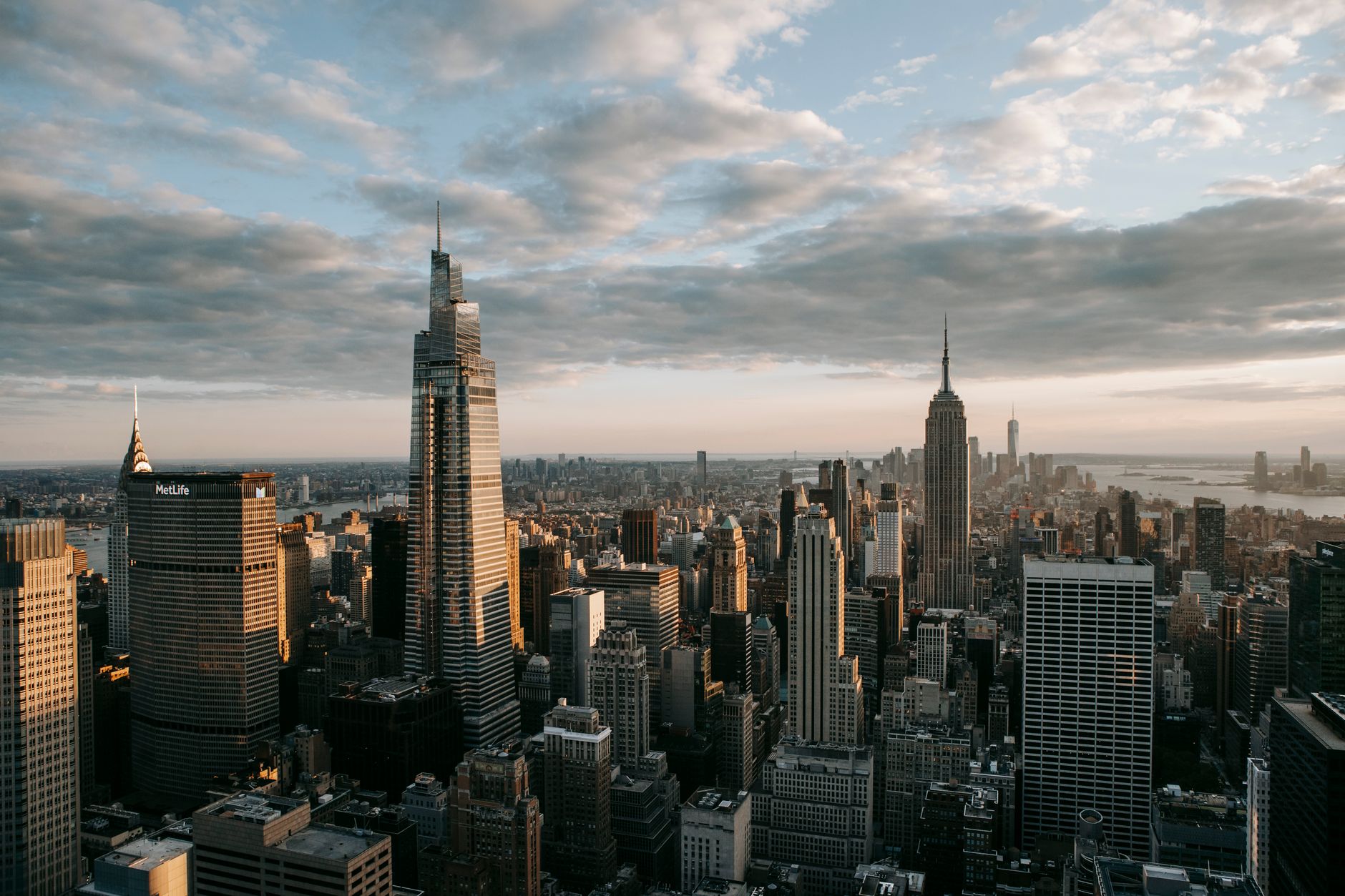
Photo by Charles Parker on Pexels
If You're Planning to Travel: You Need to Rethink Your Entire Route
The 2026 tournament spans 16 cities across three countries, and the geographic spread is wider than any World Cup in history. Eleven U.S. venues host matches, joined by three Mexican cities (Mexico City, Guadalajara, Monterrey) and two Canadian cities (Toronto, Vancouver). A fan hoping to follow their team from group stage to the final faces a potential itinerary of over 8,000 kilometers.
The new format creates 12 groups of four teams, and the top two from each group plus eight of the 12 third-placed teams advance to a Round of 32. This means knockout rounds start later than usual. The Round of 32 begins July 1; the Round of 16 follows on July 7; quarterfinals on July 11; semifinals on July 14; and the third-place playoff on July 18. Travelers who book return flights before mid-July risk missing the business end of the tournament.
Domestic flights within the United States will be the dominant mode of intercity travel. Los Angeles, Miami, Dallas, Houston, Atlanta, Philadelphia, Seattle, San Francisco, Kansas City, Boston, and East Rutherford are the 11 U.S. host venues per FIFA's official tournament page. Match clusters in the same region happen on different days, so sequencing tickets requires checking the full group-stage calendar, not just one fixture. Check our [Internal Link: World Cup 2026 venue comparison guide] for city-by-city breakdowns.
If You're Watching From Home: The Schedule Forces Impossible Choices
Group-stage matches in World Cup 2026 run from June 11 through June 27, with up to six matches per day during peak windows. That's a 73% increase in total fixtures compared to the 64-match format used from 1998 through 2022. For viewers in North American time zones, kickoff times have been structured to land in afternoon and evening slots, but some matches will start as early as 12:00 PM ET and others as late as 10:00 PM ET.
The scheduling density means conflict windows. On certain days, two marquee matches will overlap or run back-to-back with no buffer. Fans who follow multiple national teams face genuine prioritization problems. Europe's traditional powers (France, England, Germany, Spain, Portugal) are seeded into Pot 1, which means their group-stage opponents draw from lower pots and can include dark horses from Pot 4 like Cape Verde or Curaçao, squads that historically haven't qualified.
FIFA's decision to keep 32 group-stage matchdays across the same 17-day window, despite adding 16 knockout matches later, creates a front-loaded broadcast experience. The Round of 32 alone spans four days (July 1-4), generating 16 fixtures in 96 hours. Viewers should plan recording schedules or accept that they'll watch replays for at least one third of the tournament.
If You're Following Predictions and Betting Markets: The Math Changes Drastically
The shift from 8 groups of 4 to 12 groups of 4 fundamentally alters how analysts and bookmakers calculate advancement probabilities. In the 2022 Qatar World Cup, 16 of 32 teams (50%) advanced past the group stage. In 2026, 32 of 48 teams (66.7%) advance. The expected number of points needed to qualify drops from around 4-6 to roughly 3-5, depending on tiebreaker scenarios.
This compression means group-stage matches carry less elimination risk, which bookmakers price into goal-line and outright winner markets. According to ESPN's tournament data, match volume alone creates thousands of new betting opportunities across group play. But the quality differential between seeded and unseeded teams in Pot 1 vs. Pot 4 has narrowed in recent qualifying cycles, meaning upsets become more frequent and harder to predict from form alone.
Football Insights' data team tracks implied probability shifts across major sportsbooks from the moment group draws are finalized. A practical edge: third-placed team markets become more volatile than group-winner markets, because the threshold for advancing changes based on results in other concurrent groups. Experienced bettors focus on total goals markets (over/under 2.5) rather than 1X2 outcomes during the group phase. Want sharper pre-tournament reads?
What Are the Biggest Pitfalls Fans Keep Making?
Three recurring mistakes dominate fan behavior in expanded tournaments, and each one costs time, money, or both:
Booking accommodations only near the opening venue. Matches shift across the host region; basing yourself in Mexico City for the June 11 opener means a 2,000+ mile journey to reach later group-stage matches in Vancouver or Toronto. Smart fans book two or three hotel stays across the tournament window.
Underestimating the Round of 32. Because 24 of 48 teams exit before the knockout stage even begins, the Round of 32 draws no bye teams and no second chances. A single bad half eliminates a squad that would have advanced under the old format. For tactical previews, see our [Internal Link: Round of 32 format analysis].
Ignoring third-place tiebreaker rules. The expansion introduces "best third-placed teams" qualifiers, and the criteria (goal differential, goals scored, fair play points, drawing of lots) have created chaos in recent continental tournaments. A team can advance with 3 points and a minus-1 goal differential, or miss out with 4 points and a worse goal difference.
The 30-Day Check-In: How Should You Prepare Right Now?
Thirty days before the tournament opener falls on May 12, 2026. By that date, every qualified nation will have played at least two pre-World Cup friendlies, injury reports will be locked for most federations, and group draw positions will be four months old. Here's the actionable timeline:
Confirm match tickets through FIFA's official resale platform by early May. Verified resale opens April 2026, and secondary market prices for Round of 16 and later matches have already shown double-digit percentage increases above face value in pre-sale data.
Lock in travel segments between host clusters. The three most logistically intense transitions: East Coast to West Coast (Miami to Los Angeles, approximately 2,500 miles), Central U.S. to Mexico (Kansas City to Monterrey, approximately 1,200 miles), and Pacific Northwest to Northeast (Seattle to East Rutherford, approximately 2,800 miles).
Track Football Insights' daily prediction model. We publish updated outright winner odds, top scorer markets, and group-by-group advancement projections from the moment the draw is finalized through the final whistle. Our editorial team monitors 48 squads across 12 groups, with revision cycles every 72 hours during the tournament.
Stay sharp, stay informed.
Frequently Asked Questions
Q: When does the World Cup 2026 start and end?
A: The tournament runs from June 11, 2026 to July 19, 2026. The opening match takes place at Estadio Azteca in Mexico City, and the final is scheduled for MetLife Stadium in East Rutherford, New Jersey. The group stage concludes June 27, with knockout rounds beginning July 1.
Q: How many teams participate in World Cup 2026?
A: 48 national teams will compete, up from 32 in previous tournaments. They are divided into 12 groups of four teams each. The top two finishers from each group plus eight of the 12 third-placed teams advance to the Round of 32, producing 32 teams in the knockout phase.
Q: Which cities are hosting World Cup 2026 matches?
A: 16 cities across three countries: 11 in the United States (Atlanta, Boston, Dallas, East Rutherford, Houston, Kansas City, Los Angeles, Miami, Philadelphia, San Francisco Bay Area, Seattle), 3 in Mexico (Guadalajara, Mexico City, Monterrey), and 2 in Canada (Toronto, Vancouver). Each city hosts between 4 and 8 matches depending on venue capacity and stage assignment.
Q: How does the new 48-team format affect prediction strategies?
A: The expansion shifts advancement probability from 50% to 66.7% of the field, which compresses point thresholds for group-stage qualification. Bookmakers adjust group-winner odds downward and increase variance on third-place markets. Analysts who track tiebreaker scenarios (goal differential, goals scored, fair play points) gain measurable edges over casual bettors, per FIFA's tournament regulations.
Q: What are common problems with attending a multi-country World Cup?
A: Travelers face visa requirements for multiple jurisdictions (U.S. ESTA, Mexican visitor permit, Canadian eTA), currency exchange friction, and intercity flight logistics that can span 1,200 to 2,800 miles. Weather varies dramatically: Seattle and Vancouver matches in late June average 65-70°F, while Houston and Miami exceed 90°F with high humidity.
Q: How much does attending World Cup 2026 cost on average?
A: Face-value match tickets range from approximately $60 for group-stage seats to $1,800+ for final tickets at MetLife Stadium. Hotel rates in host cities during match windows have already shown 200-400% increases over baseline. A 14-day attendance package covering four group matches and one knockout match typically totals $4,500-$9,000 per person including domestic flights.
Q: Is there a way to follow every match without attending in person?
A: FIFA's broadcast partner network covers all 104 matches across free-to-air and subscription channels in 200+ territories. Streaming options include FIFA+ for select matches and major network apps (Fox, BBC, ITV, Globo) in their respective regions. For detailed coverage and predictions, explore our [Internal Link: World Cup 2026 complete broadcasting guide].
Continue your strategic research.