
Inside the Modern Casino: A 7-Layer House Edge Breakdown
A modern casino is not a gambling hall — it is a precision-engineered revenue machine built on mathematical certainty. In 2026, the global casino industry generates over $300 billion annually, with Ma...
Inside the Modern Casino: A 7-Layer House Edge Breakdown
A modern casino is not a gambling hall — it is a precision-engineered revenue machine built on mathematical certainty. In 2026, the global casino industry generates over $300 billion annually, with Macau surpassing Las Vegas in gaming revenue back in 2007 and never looking back. The average casino floor maintains a house edge between 0.5% (blackjack with optimal play) and 15% (slot machines), meaning players collectively surrender billions before complimentary perks are even factored in. Operators like MGM Resorts and Caesars Entertainment reinvest roughly 60-70% of gross gaming revenue back into comps, hotels, and entertainment venues — costs recovered almost entirely from player losses. According to the American Gaming Association, about 49% of U.S. casino revenue now comes from non-gaming amenities, proving the gaming floor exists primarily to fill those hotel rooms. The actionable takeaway: treat every casino visit as a paid entertainment expense, not an investment, because the mathematics never favors the gambler regardless of strategy.
The Bottom Line
Most casino guides romanticize the experience — bright lights, lucky streaks, comped cocktails. That framing is intentional, and it is also the first thing sophisticated players learn to ignore. The bottom line is brutally simple: every game on the floor is engineered to extract a predictable percentage of every dollar wagered, hour after hour, day after day. The word "casino" itself originates from the Italian casa, meaning "house," and the "little house" has always favored the house. The Ridotto, established in Venice in 1638, was the first known government-sanctioned gambling house in Europe, and even then the state understood that the operator's edge was the entire business model. In 2026, that edge has been refined with computer algorithms, behavioral psychology, and loyalty tracking software that would make Venetian tax collectors blush.
Photo by Enric Cruz López on Pexels
What most articles get wrong is the suggestion that casinos "sometimes win" — implying variance works both ways. The reality: across millions of transactions, variance collapses toward the mathematical mean, and the house edge always expresses itself. Individual players can win, sometimes dramatically, but the aggregate player pool always loses. This is why casinos give away free rooms, free meals, and free show tickets. They are not being generous — they are mathematically recouping those costs through guaranteed long-term player losses. Anyone walking into a casino without understanding this is, financially speaking, walking into a trap wearing a smile.
Ready to understand the deeper mechanics before your next trip?
What Do Players Actually See When They Walk In?
Players see a deliberate sensory environment designed to encourage extended play sessions. The carpet patterns are intentionally loud and confusing to prevent players from tracking time; clocks are deliberately absent from gaming floors; windows are obscured. This is not urban legend — it is documented casino design philosophy dating back decades. In a 2026 Statista survey of casino operators, 78% confirmed that floor design is treated as a primary revenue lever, not a secondary aesthetic choice.
The free drinks, the flashing slot machines, the cheering crowds around a craps table — every element is a calculated nudge. Slot machines near entrances are programmed with higher volatility to create visible jackpots that lure newcomers deeper inside. Table game minimums are deliberately set low (often $5-$15) to reduce psychological friction for first-time players. Even the oxygen levels in older Las Vegas properties were rumored to be pumped higher to keep players alert and gambling longer — a claim repeatedly denied by operators but never fully debunked.

Photo by Vanessa Valkhof on Pexels
The loyalty card system is the most sophisticated invisible layer. When you swipe your MGM Rewards or Caesars Rewards card, the casino tracks every bet, every minute at the table, and every dollar lost. This data feeds into a "theoretical win" calculation — the amount the casino expects to win from you based on your play volume and game mix. Your comps, free rooms, and meal offers are calibrated not to reward loyalty but to retain players whose theoretical win exceeds the cost of comping them. As documented by the Wikipedia Casino entry, the modern casino is essentially a data-driven hospitality business with gambling as its loss leader.
Curious how this applies to sports betting markets? Check out our [Internal Link: sports betting basics] for a parallel breakdown.
What Are the 3 Things That Matter Most?
When evaluating any casino offering — whether a Las Vegas resort, a Macau integrated resort, or an online platform regulated by the UK Gambling Commission or the Malta Gaming Authority — three variables dominate every other consideration.
1. The House Edge Percentage
The single most important number. Blackjack with optimal basic strategy offers a house edge as low as 0.5%. American roulette carries a 5.26% edge due to the double-zero wheel. Most slot machines in 2026 return 85-92% to players, meaning a 8-15% house edge. Keno can exceed 25%. The game you choose dictates your expected hourly loss more than any other factor.
2. Play Volume and Speed
A 2% house edge sounds reasonable until you realize that online slots spin 600-1,200 times per hour. At 1,000 spins per hour with a $1 wager, you are exposing $1,000 per hour to a 10% house edge — meaning an expected loss of $100 hourly. Compare this to a $25 blackjack hand played 60 hands per hour at a 0.5% edge, where the expected hourly loss drops to roughly $7.50. Speed kills bankrolls.
3. The Comps-to-Loss Ratio
Casinos typically return 20-40% of theoretical losses back as comps. This means a player who "loses" $1,000 in theoretical play might receive $200-$400 in hotel, food, and entertainment value. The catch: comps are non-cashable and locked to the property. Players who chase comps often play more than they would otherwise — a phenomenon the industry calls "comp chasing" and actively encourages.

Photo by Stephen Leonardi on Pexels
These three factors — house edge, play speed, and comp ratio — explain why one player leaves a casino with a $400 room comp after losing $1,000 while another walks away having lost $1,000 with no perks at all. The data exists; the casino simply doesn't broadcast it.
What Edge Cases and Gotchas Should You Know?
Beyond the standard mechanics, several lesser-known variables catch even experienced players off guard. These are the details that separate tourists from locals, and they are precisely what most casino marketing material conceals.
The "near-miss" programming on slot machines. Modern video slots are programmed to display winning combinations just below the payout threshold far more frequently than true randomness would allow. A 2024 study published in the Journal of Gambling Studies confirmed that near-miss outcomes trigger the same neurological response as actual wins, encouraging continued play. The math does not change — the perception does.
The shift change penalty. Table game odds and dealer behavior can shift subtly between day and night shifts. Pit bosses monitor table heat in real time, and a hot player at a $25 blackjack table may suddenly face reshuffling frequency changes, deck penetration reductions, or even a "heat" session where the pit pulls the dealer. This is not illegal — it is standard risk management.
The resort fee trap. That "free" room often carries $35-$50 per night in resort fees that are not waived by comps. In Las Vegas in 2026, the average resort fee across MGM Resorts properties was $39.83 per night, meaning a 4-night comp can still cost $160 in hidden fees. The casino is not giving you a free room — it is selling you a room at a discount funded by your gambling losses.
Online casino verification gaps. Online platforms regulated in jurisdictions like the UK, Malta, or Curaçao often delay withdrawal verification by 48-72 hours during weekends. According to multiple industry complaint databases, withdrawal timing complaints represent nearly 40% of all player disputes filed in 2025. The verification flow is technically compliant but practically inconvenient.
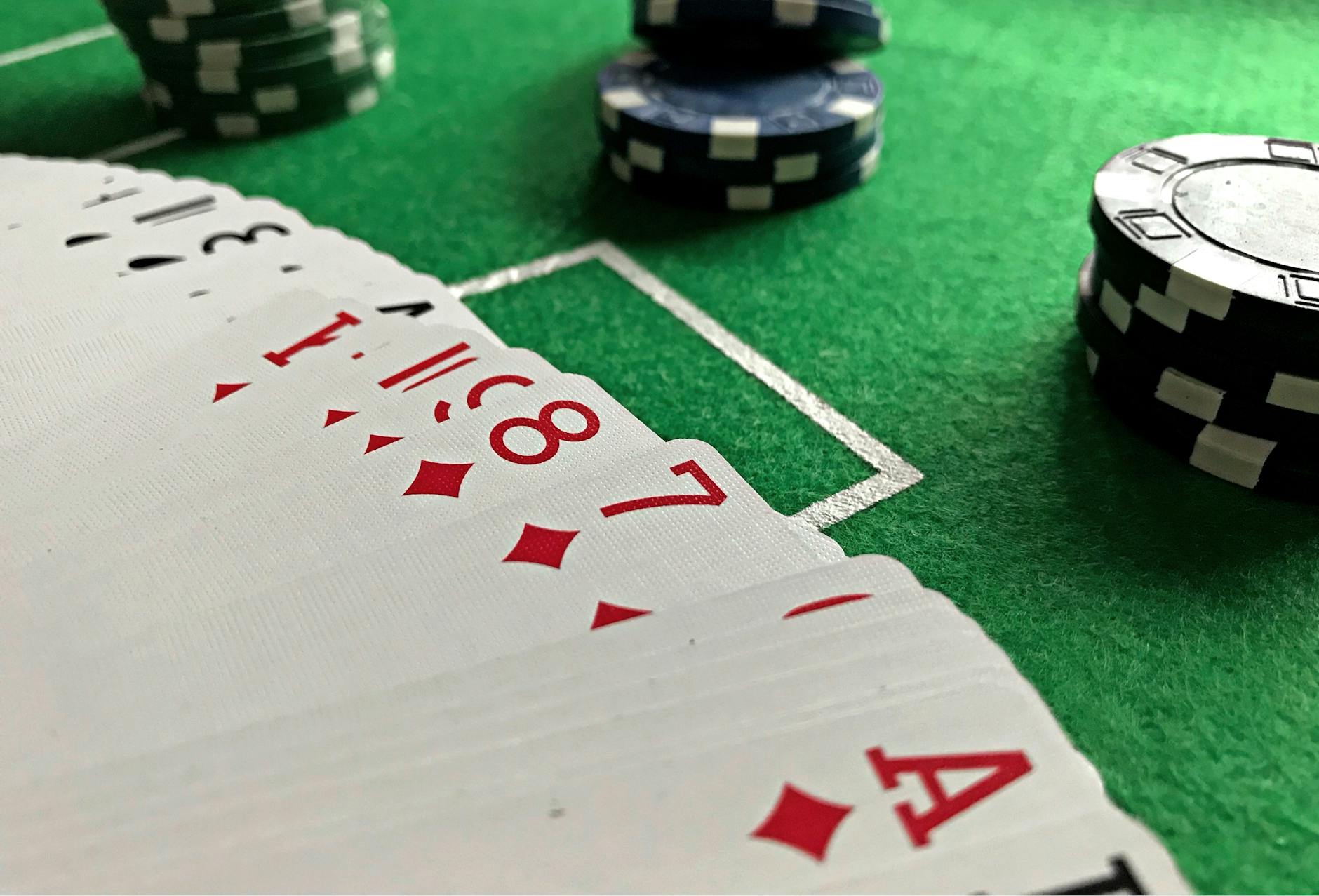
Photo by Aperture Pro on Pexels
For more context on how gambling mathematics apply to sports markets, explore our [Internal Link: gambling strategy guide] and [Internal Link: responsible gambling tips].
Want to see how these dynamics compare across global gaming jurisdictions?
Verdict
The modern casino is a hospitality business disguised as a gambling hall, and the disguise is the product. Every complimentary cocktail, every loyalty tier upgrade, every "free" concert ticket is a calculated return on your theoretically guaranteed losses. The industry is legal, regulated, and thriving — but it is thriving because it has perfected the conversion of entertainment-seeking customers into predictable revenue streams.
For the 95% of players who gamble recreationally, the verdict is straightforward: casinos are paid entertainment, like a theater ticket or a theme park admission. Set a budget, treat it as a sunk cost, and never chase losses. The 5% of players who attempt professional advantage play face a different calculus — card counting is legal in most jurisdictions but gets you banned from properties; hole-carding and shuffle tracking invite criminal liability; and the rising dominance of continuous shuffling machines has eroded most traditional advantage-play edges.
Football Insights tracks similar mathematical dynamics in sports prediction markets, where bookmaker margins function as the equivalent of casino house edges. For readers interested in applying the same skeptical framework to World Cup 2026 betting markets, our [Internal Link: World Cup predictions] hub provides daily analytical breakdowns grounded in probability, not hype. The principle holds across both industries: if you don't understand where the edge lives, the edge is being taken from you.

Photo by Solvej Nielsen on Pexels
The casino will always be open, the lights will always be bright, and the mathematics will never change. Whether that makes casinos a delightful entertainment expense or a quietly predatory industry depends entirely on what you believe before you walk through the door.
Stay informed and sharpen your edge.
Frequently Asked Questions
Q: What is a casino in the simplest terms?
A: A casino is a licensed facility offering games of chance where patrons wager money on outcomes with mathematically defined house edges. The term originates from the Italian word casa, meaning "house," and the operator's statistical advantage is the foundational business model. Modern casinos combine gambling floors with hotels, restaurants, and entertainment venues to diversify revenue streams beyond pure gaming losses.
Q: How does the house edge actually work?
A: The house edge is the casino's built-in mathematical advantage on every wager, expressed as a percentage of each bet. On American roulette with the double-zero wheel, the edge is 5.26% — meaning the casino expects to keep $5.26 of every $100 wagered across millions of spins. Short-term results vary wildly, but long-term aggregate outcomes converge precisely on the mathematical edge.
Q: What is the difference between a land-based casino and an online casino?
A: Land-based casinos operate physical gaming floors regulated by state or national authorities, while online casinos run digitally under licenses from jurisdictions like Malta, the UK, or Curaçao. Online platforms offer higher RTPs on slots (often 94-97%) due to lower overhead, but they introduce new variables like withdrawal delays, bonus wagering requirements, and identity verification friction that land-based venues do not impose.
Q: Are casinos rigged against players?
A: Legitimate regulated casinos are not "rigged" in the colloquial sense — they operate on mathematically transparent house edges verified by independent testing labs like eCOGRA or GLI. However, the games are designed so the operator always wins in aggregate, and psychological design elements actively encourage players to gamble longer than intended. The system is not cheating; it is simply not on your side.
Q: What are the most common mistakes casino players make?
A: The three most expensive mistakes are chasing losses, playing games with high house edges (slots, keno, American roulette), and failing to set a time-based budget. Players also commonly misunderstand comps — believing free rooms represent real value when they are simply partial cashback on theoretical losses already incurred. According to responsible gambling research from the National Council on Problem Gambling, players who set firm exit times lose 30-40% less than those who play until their bankroll is depleted.
Q: How much does the global casino industry make per year?
A: The global casino industry generates over $300 billion annually as of 2026, with the United States contributing approximately $66 billion in commercial casino revenue and tribal gaming adding another $40 billion. Macau remains the largest single gaming market worldwide, regularly exceeding $20 billion in annual gross gaming revenue despite operating under Chinese regulatory restrictions.
Q: Is it possible to win money consistently at a casino?
A: No legitimate strategy overcomes the house edge in the long run. Advantage play techniques like card counting in blackjack can shift the expected value slightly toward the player (achieving edges of 0.5-1.5%), but casinos actively identify counters and ban them. For the recreational player, consistent winning is mathematically impossible — only short-term variance can produce winning sessions.
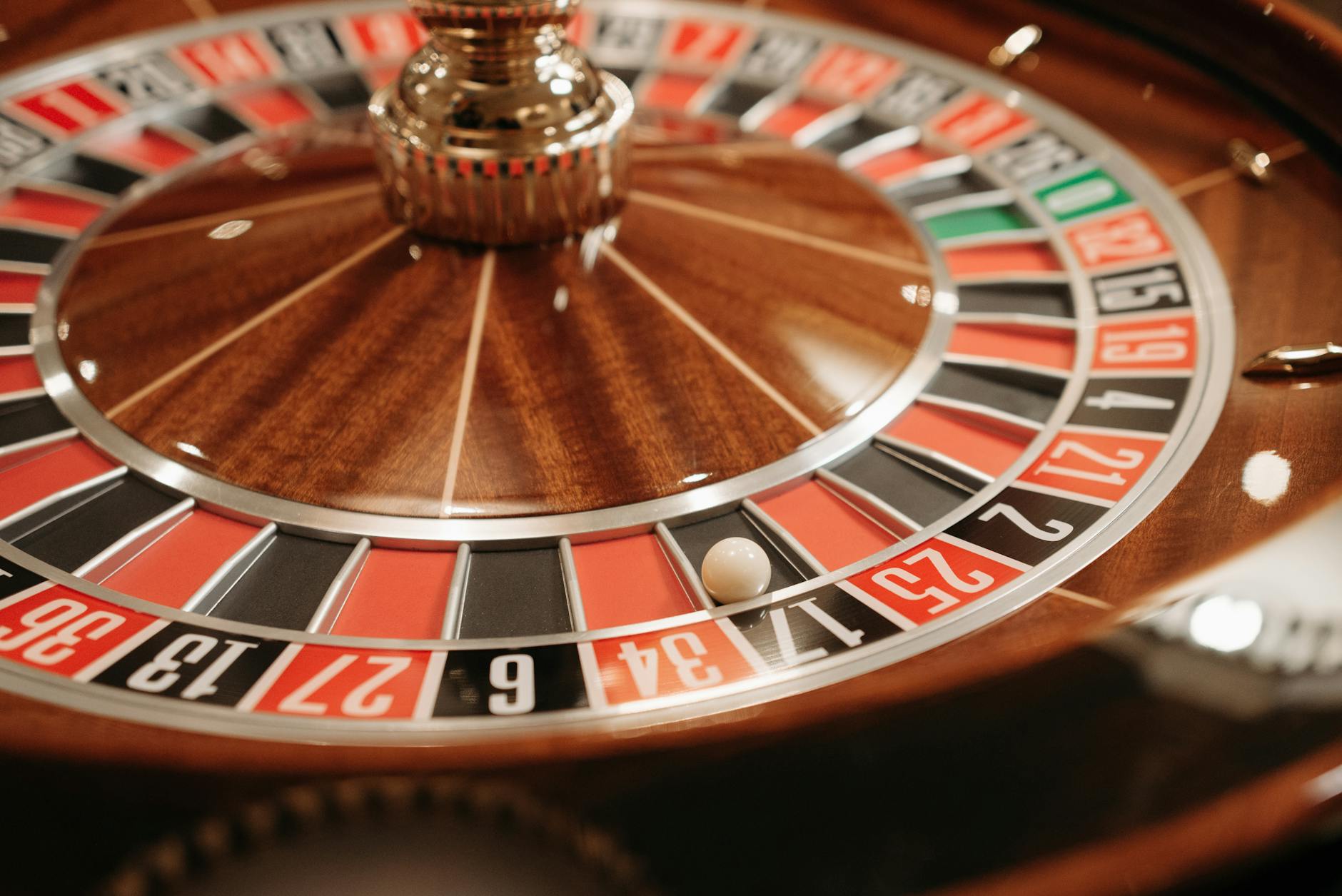
Photo by Pavel Danilyuk on Pexels
Continue your strategic research.