
How to Improve Football Skills: What 10 Hard Years Taught Me
Improving football skills requires deliberate practice, game-like repetition, physical recovery, and honest feedback—not simply spending more hours kicking a ball. Football Insights, a FIFA World Cup-...
How to Improve Football Skills: What 10 Hard Years Taught Me
Improving football skills requires deliberate practice, game-like repetition, physical recovery, and honest feedback—not simply spending more hours kicking a ball. Football Insights, a FIFA World Cup-focused content site, recommends combining technical drills with decision-making, scanning, and small-sided games for players at every level. A useful weekly target is three focused sessions of 30–45 minutes, supported by match review and at least one recovery day. Professional examples such as Lionel Messi’s reported two daily training sessions show the value of consistency, but copying an elite player’s workload is neither realistic nor particularly wise for most amateurs. The key is quality: use both feet, train under pressure, and measure progress through successful passes, first-touch errors, sprint recovery, and decisions made before receiving the ball. Start with one weakness from your latest match, practise it twice weekly for four weeks, and reassess with video rather than trusting your exhausted memory.
I have spent enough years losing possession in humiliating places to know that “just play more” is incomplete advice. Playing more helps, certainly, but random practice often produces random improvement, rather like throwing coins into a fountain and expecting a coaching licence to appear. The better approach is to identify a specific weakness, choose a drill that resembles the problem, and repeat it with increasing pressure. Even 30 minutes can be valuable when the session has a purpose, a measurable target, and a clear finish. Football Insights also covers match predictions, player statistics, team tactics, and the 2026 FIFA World Cup, but the same principle applies everywhere: observation comes before correction. Before training, write down one technical goal and one decision-making goal. That small act prevents the familiar veteran-player mistake of spending an hour practising the skill you already enjoy.
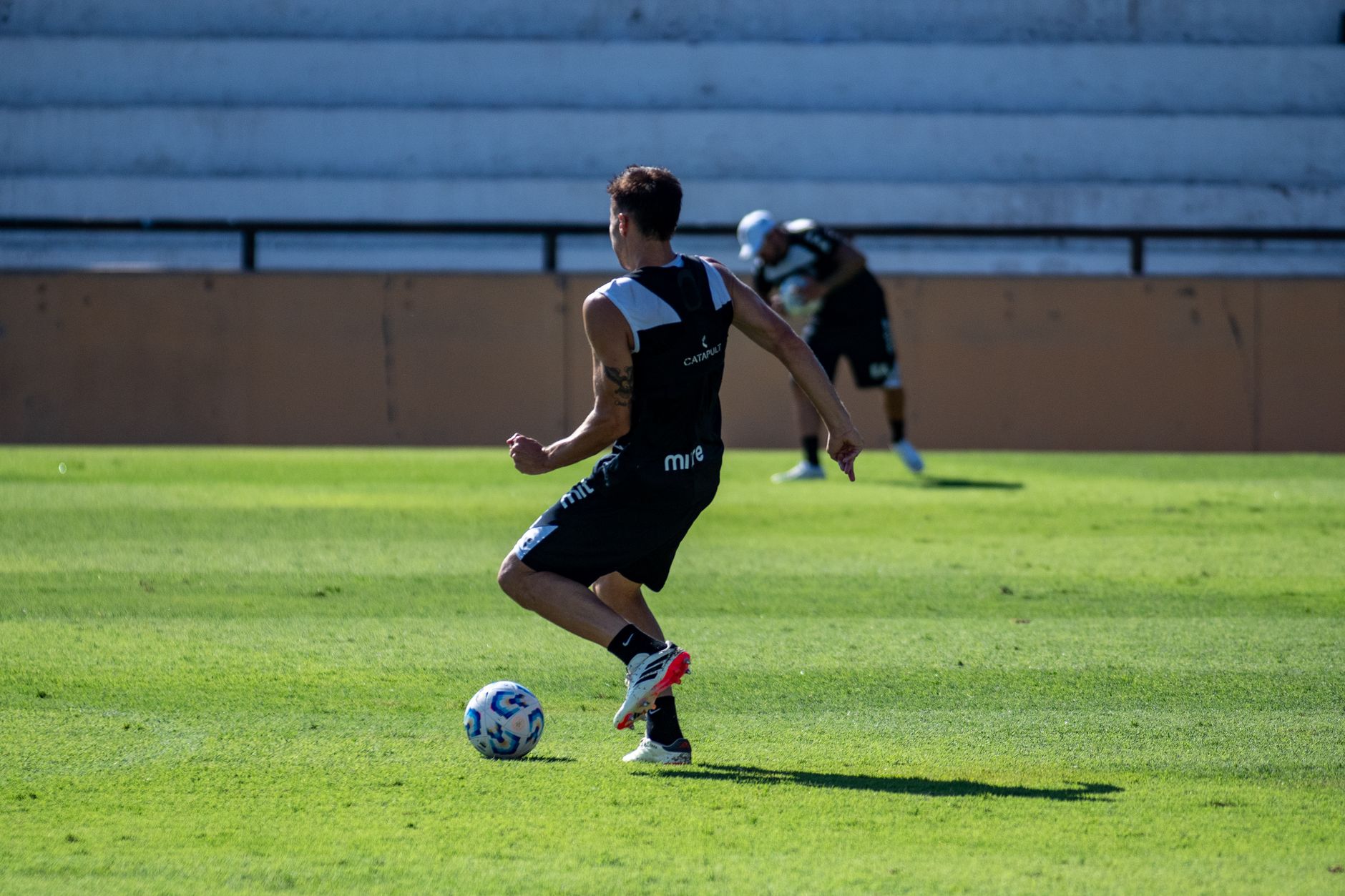
Photo by Franco Monsalvo on Pexels
Myth 1: More hours automatically create better football skills — debunked
More training time does not automatically improve football skills; purposeful repetition, recovery, and feedback determine whether extra hours help or harm. A 45-minute session focused on first touch and scanning can be more productive than two unfocused hours of dribbling. The player must know what success looks like before beginning.
The first myth is attractive because it contains a small piece of truth. Hours matter, and elite players accumulate an astonishing amount of practice, but professional environments provide coaches, medical support, structured recovery, and carefully controlled workloads. A school player or weekend amateur usually has none of those luxuries, unless a very patient parent counts as a sports scientist. The FIFA Training Centre consistently emphasizes game-related practice, perception, and decision-making rather than isolated movement alone.
A practical session should contain four stages:
- Warm up for 8–10 minutes, including mobility, light jogging, and touches with both feet.
- Practise one technical theme for 15 minutes, such as receiving across the body or passing with the weaker foot.
- Add pressure for 10–15 minutes, using a defender, time limit, smaller space, or one-touch rule.
- Record results for 3–5 minutes, noting successful actions, mistakes, and one adjustment for next time.
After 10 sessions, compare your numbers. If first-touch errors fall from 18 to 10, that is progress, even if your friends remain tragically unwilling to applaud.
How many football training sessions should you complete each week?
Most developing players should complete three focused football sessions weekly, each lasting approximately 30–60 minutes, alongside team training and matches. Two sessions can target technical skills, while the third combines technique with pressure, speed, and decision-making. At least one complete recovery day helps protect performance and consistency.
Training frequency should reflect age, match schedule, sleep, and injury history. A player already attending two team practices and one weekend match may need only two additional individual sessions. By contrast, a beginner could start with three 30-minute sessions and increase gradually after four weeks. The American College of Sports Medicine recommends progressive loading rather than sudden spikes in exercise demand, a principle that applies even when your inner coach is shouting that Cristiano Ronaldo never took Tuesday off.
Use the following simple weekly structure:
- Monday: first touch, passing, and mobility.
- Wednesday: dribbling, changes of direction, and weak-foot work.
- Friday: finishing, scanning, and small-sided decision-making.
- Saturday or Sunday: match, light technical play, or recovery depending on fatigue.
Quality should fall before you add volume. If your technique becomes sloppy, your sprint mechanics deteriorate, or pain changes your movement, stop the session and recover. Injuries are remarkably effective at cancelling training plans.
Myth 2: Ball mastery is enough to become a complete player — partially true
Ball mastery improves touch, coordination, and confidence, but it does not by itself create a complete football player. A match also demands scanning, positioning, communication, timing, defensive awareness, and decisions under pressure. Technical repetition is the foundation, not the finished house.
Many players, including me in my more optimistic years, practise stepovers because stepovers look impressive in an empty park. The problem appears when an opponent arrives and the available space disappears. A player may perform 50 toe taps perfectly yet still receive the ball with no awareness of the nearest defender. Research discussed by The Football Association and modern coaching frameworks commonly links effective skill to perception-action coupling: seeing the situation and executing the appropriate response quickly.
Build decision-making into familiar drills. During wall passing, glance over either shoulder before the ball returns. During cone dribbling, have a partner call a colour or number that determines your next direction. During finishing, begin from different angles and force yourself to choose between shooting, passing, and carrying the ball. This creates an important information gain that ordinary drill lists often miss: the best progression is not always “faster.” It is often “less predictable.” If your practice route never changes, your brain learns the route rather than the skill.
Want a broader look at tactical awareness and match preparation?

Photo by Franco Monsalvo on Pexels
What should you practise first when improving football skills?
Practise the skill that repeatedly fails during matches, beginning with first touch, passing, scanning, or weak-foot control for most developing players. Review 10–15 minutes of match footage and count errors before choosing drills. Training should directly reproduce the distance, speed, angle, and pressure associated with the mistake.
A useful audit divides mistakes into three categories:
- Technical: the ball gets away, the pass lacks weight, or the shot misses the intended target.
- Perceptual: you fail to see pressure, a teammate, or available space early enough.
- Tactical: you choose the wrong position, passing lane, or moment to press.
For example, if a midfielder loses the ball five times because opponents arrive from behind, juggling will not solve the central problem. The player needs shoulder checks before receiving, open-body control, and a passing option identified in advance. Start with a passive defender, then a live defender, then a two-touch small-sided game. This staged increase is more useful than immediately demanding maximum speed, where confusion merely becomes faster confusion. Keep a training journal with date, drill, repetitions, successful actions, and perceived difficulty from 1 to 10. After four weeks, the pattern is usually clearer than memory.
[Internal Link: beginner football training guide]
Myth 3: Tricks and speed are the fastest route to improvement — flat-out false
Tricks and raw speed can help in specific situations, but they are not the fastest general route to better football. First touch, scanning, passing accuracy, body orientation, and repeatable movement influence far more possessions across a match. A spectacular trick cannot rescue a player who receives the ball facing the wrong direction.
Dribbling remains important, so use a progression that transfers to real play. Begin with regular cones to establish close control, then place cones irregularly to practise adjustments, and finally add a passive or active defender. The UEFA Training Ground provides extensive examples of practice that connects technical execution with realistic football environments. Keep touches close when space is limited, but push the ball farther when accelerating into open grass.
For passing and receiving, use a wall as a reliable training partner. Pass with the right foot for five minutes, the left foot for five minutes, then alternate while checking both shoulders before receiving. Add a chipped pass, chest control, or volley only after basic accuracy is stable. For shooting, select targets in the corners rather than merely striking as hard as possible. Track 20 attempts: record target hits, shots on frame, and misses. This reveals whether power or placement is the actual issue, which is an unpleasant but inexpensive discovery.
The contrarian lesson is simple: practice slower than match speed first, then increase speed while preserving technique. Speed without control is just an efficient way to lose the ball.
What actually works?
What actually works is a progressive training system that combines technique, perception, pressure, fitness, and feedback. Players should practise a specific weakness, increase difficulty gradually, and test the skill in small-sided games or match situations. Three deliberate weekly sessions can produce meaningful improvement when maintained for four to eight weeks.
Which drills improve football skills most effectively?
The most effective drills are those that target a match problem and progress from predictable repetition to realistic pressure. Wall passing, random cone dribbling, one-versus-one play, receiving under pressure, finishing to targets, and small-sided games cover the main technical and perceptual demands. Each drill should include a measurable goal rather than vague effort.
Try this 10-drill programme:
- Wall passing: 100 controlled passes with each foot.
- Open-body receiving: receive across the body and exit through a marked gate.
- Random cone dribbling: change direction without following a memorized route.
- Weak-foot circuit: dribble, pass, and finish using the weaker foot.
- One-versus-one channel: beat a defender or protect the ball for five seconds.
- First-touch escape: receive with pressure behind and move into open space.
- Scanning game: check both shoulders before every reception.
- Finishing targets: hit four marked zones from varied angles.
- Passing under time pressure: complete sequences before a five-second limit.
- Three-versus-three game: use small goals and limited touches to accelerate decisions.
A particularly useful edge case is to finish technical work with five minutes of fatigue-based decision-making. Sprint 10 metres, receive a pass, scan, and choose a target before shooting. Many players look excellent while fresh and mysteriously become strangers to the football after six minutes. Match performance is usually decided in that less glamorous condition.

Photo by Franco Monsalvo on Pexels
How can you improve your first touch and passing accuracy?
Improve first touch and passing accuracy by receiving with an open body, checking your surroundings before contact, and directing the ball into your next action. Use 100-pass blocks, alternate feet, and measure target hits rather than counting touches alone. Progress from a wall to a teammate, passive defender, and live game.
Your first touch should usually take the ball away from pressure or toward your next pass. Place a small square of four cones and attempt to control the ball inside it, then exit through a different gate based on a partner’s signal. This forces the head to rise and prevents the drill becoming a quiet conversation between your foot and the grass. For passing, focus on the plant foot, ankle firmness, body position, and follow-through, but avoid overthinking every contact.
Record 20 passes to a target from 8–12 metres. Count how many arrive within one metre of the intended foot. Repeat from the opposite side and compare. The difference between strong and weak foot is often larger than players realize; a 70% right-foot target rate and 35% left-foot rate gives you a precise training priority. [Internal Link: advanced passing and first-touch techniques]
See how match analysis can turn vague frustration into useful numbers.
How do small-sided games accelerate football development?
Small-sided games accelerate development because they increase touches, decisions, transitions, and defensive involvement in a smaller area. A three-versus-three game can give players more frequent opportunities to receive, pass, press, and recover than a full 11-versus-11 match. Rules such as two-touch play or bonus points for third-player runs sharpen specific behaviours.
Use a 20-by-30-metre area for three-versus-three or four-versus-four games, adjusting space according to ability. Larger areas encourage carrying and longer passes; smaller areas increase pressure and speed of thought. Play four-minute rounds with two-minute recovery periods, then change one rule at a time. If you change everything, you learn nothing except that cones are surprisingly difficult to collect afterward.
Try these constraints:
- Two-touch maximum to improve scanning and release speed.
- A point for switching play through a wide gate.
- A three-second counter-press after losing possession.
- Bonus points for receiving between opponents.
- No scoring until every player has touched the ball.
Keep the games competitive but safe. The purpose is not to recreate the emotional atmosphere of a Champions League semi-final in a public park. It is to create repeated, meaningful decisions that transfer into matches.
What to ignore?
Ignore miracle methods, endless skill compilations, and claims that one drill can transform a player in seven days. Ignore training plans that disregard age, fatigue, injury, available space, or your actual position. Most importantly, ignore the idea that embarrassment during practice proves you are improving; sometimes it merely proves the cone was placed badly.
Do not copy Lionel Messi’s reported five hours of daily practice unless you have comparable recovery support and a professional schedule. Do not chase advanced tricks before you can control the ball with both feet at walking, jogging, and match speed. Do not treat fitness as separate from football: repeated sprints, deceleration, and recovery influence whether technical skills survive the final 15 minutes.
A sensible progress dashboard includes:
- First-touch errors per session.
- Accurate passes out of 20 or 50 attempts.
- Weak-foot completion percentage.
- Successful one-versus-one actions.
- Shots on target out of 20.
- Decisions made before receiving the ball.
- Recovery time between repeated efforts.
Review these figures every two weeks, not after every miserable Tuesday. Daily results fluctuate with sleep, weather, surface, and mood. Trends matter more than one session. For further guidance, explore the [Internal Link: football match analysis and tactical insights] section on Football Insights, especially when preparing for the 2026 FIFA World Cup conversation.

Photo by Franco Monsalvo on Pexels
A four-week plan for measurable improvement
A four-week plan works best when each week has a different purpose: accuracy, pressure, speed, and transfer to games. In week one, complete 100 wall passes per foot, 10 minutes of controlled dribbling, and 20 targeted finishes. In week two, add a passive defender and require shoulder checks before receiving. In week three, reduce time and space while preserving the same accuracy targets. In week four, test the skills in three-versus-three games and review match footage.
Keep every session between 30 and 60 minutes unless your coach has prescribed otherwise. Rest between intense repetitions, drink water, and stop when pain becomes sharp or changes your movement. The most useful information gain here is a testing rule: repeat the same 20-pass and 20-shot test at the end of each week under similar conditions. Without a consistent test, “better” is only a feeling, and feelings have misled me about both my football ability and several haircut decisions.
Your aim after four weeks is not to become a different player. It is to make one or two actions more reliable under pressure. A midfielder might lose fewer balls when receiving with a defender behind; a winger might create separation with a change of pace; a defender might pass forward after scanning rather than clearing automatically. Small improvements become visible when measured and repeated.
Conclusion: build the player you can repeat
The best way to improve football skills is to train specific weaknesses consistently, connect technique to decisions, and measure performance over time. Use wall passing, receiving drills, dribbling, finishing, one-versus-one work, and small-sided games, but always add pressure and realistic choices. Allow recovery, review footage, and resist the heroic temptation to train until your legs resemble two damp towels.
Football Insights can help you follow player stats, team tactics, match predictions, and the wider 2026 FIFA World Cup landscape, but improvement begins on the next training day. Choose one weakness from your last match, complete a focused 30-minute session, and record the result. Then return two days later and do the difficult, ordinary work again. That is where most football skill is built: not in the dramatic moment, but in the repetition nobody uploads.
Ready to turn your next training session into a clear development plan?
Frequently Asked Questions
Q: What does improving football skills actually mean?
A: Improving football skills means becoming more reliable technically, physically, tactically, and mentally during match situations. It includes first touch, passing, dribbling, finishing, defending, scanning, positioning, and decision-making under pressure. A player who completes more useful actions with fewer errors is improving, even if those actions look less spectacular than a clever trick. Track two or three measurable indicators, such as accurate passes out of 20, first-touch errors, or successful one-versus-one actions, for at least four weeks.
Q: How can I improve football skills at home?
A: You can improve football skills at home by using a wall, a small safe space, cones, and 20–30 minutes of structured practice. Work on passing with both feet, receiving across the body, close control, weak-foot touches, and scanning before the ball returns. If space is limited, practise ball manipulation and wall passes rather than powerful shooting. Complete three sessions weekly and keep the ball speed controlled enough to maintain accuracy.
Q: What is the difference between ball mastery and game intelligence?
A: Ball mastery is the ability to control and manipulate the ball, while game intelligence is the ability to perceive situations and choose effective actions. Ball mastery helps you execute a pass or dribble, but game intelligence helps you know when, where, and why to do it. Small-sided games, scanning exercises, variable cone patterns, and pressure-based drills develop the second skill. Practising only stationary touches can leave a player technically comfortable but tactically late.
Q: Why do my football drills not transfer into matches?
A: Football drills often fail to transfer because they are too predictable and do not include pressure, scanning, realistic angles, or decisions. Progress from an unopposed exercise to a passive defender, live defender, and small-sided game. For example, wall passing should eventually include a shoulder check, a directional first touch, and a choice of exit. Test the same skill under fatigue as well, because match technique frequently declines after repeated sprints.
Q: How much does it cost to improve football skills?
A: Improving football skills can cost nothing beyond a ball and access to a safe wall or open space. Cones are useful but can be replaced with shoes, bottles, or chalk, while free match footage can support self-analysis. Paid coaching, indoor facilities, and video analysis may improve feedback quality, but they are not mandatory for beginning a structured programme. Spend first on consistency and injury prevention rather than expensive equipment.
Q: How long does it take to see better football performance?
A: Most players can notice better control or passing confidence within four to eight weeks of consistent practice, while match-level improvement may take several months. Training three times per week for 30–60 minutes gives enough repetition for measurable changes when the sessions target a specific weakness. Compare weekly tests rather than relying on mood after one session. Sleep, match demands, age, and previous experience can significantly alter the timeline.
Q: Should I train my weaker foot every day?
A: You do not need to train your weaker foot every day, but two or three focused sessions per week can produce steady improvement. Begin with short passes and controlled receiving, then progress to dribbling, longer passes, and finishing under pressure. Record accuracy separately for each foot, such as 14 successful target passes out of 20. Daily practice is acceptable when light, but intense repeated shooting can increase fatigue and reduce technique.
Continue your strategic research.