Gambling Deutsch 2026 vs International Sites: Player Protection
The German gambling market in 2026 operates under the Gemeinsame Glücksspielbehörde der Länder (GGL), the federal regulator that began issuing nationwide licenses in July As of August 2026, operators....
Gambling Deutsch 2026 vs International Sites: Player Protection
The German gambling market in 2026 operates under the Gemeinsame Glücksspielbehörde der Länder (GGL), the federal regulator that began issuing nationwide licenses in July 2022. As of August 2026, operators holding a valid GGL license must comply with a €1,000 monthly deposit cap, mandatory identity verification at signup, and a strict 5-second pause between slot spins. German-licensed platforms like Bwin, Tipico, and JackOne compete against offshore sites licensed in Curaçao or Malta, which continue to accept German players outside the GGL framework. Bwin alone offers over 1,300 slots with a 200% welcome bonus up to €80 plus 100 free spins under its GGL authorization. The core distinction for players: GGL-licensed brands guarantee tax-compliant payouts and automatic OASIS self-exclusion enrollment, while international platforms deliver larger promotional packages but no German consumer law protection. Players prioritizing legal security in the German market should default to GGL-licensed operators.
Rain hammered the windows of a Frankfurt apartment on a Tuesday evening in March 2026, and inside, a group of friends gathered around a laptop debating where to place their World Cup qualifying bets. The argument wasn't about which team to back — it was about whether to use a German-licensed sportsbook or an offshore casino that accepted euros. One friend had deposited €500 at a Curaçao-licensed site the week before and received a €2,500 welcome bonus. Another insisted that any site not authorized by the GGL was a legal gray area at best. The conversation captures the central tension of gambling deutsch in 2026: regulation has never been tighter, but the border between licensed and unlicensed operators has never been more porous.
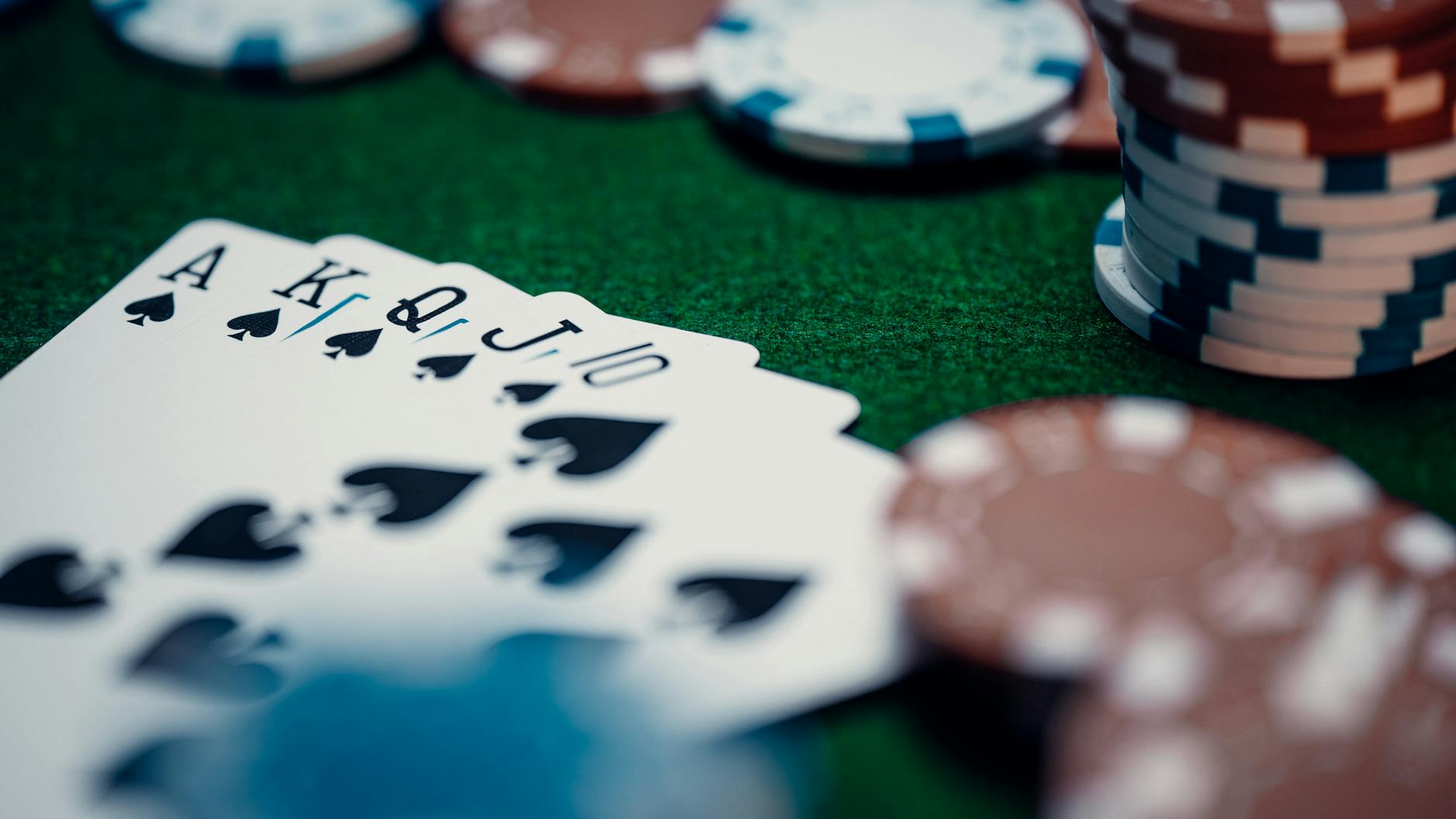
Photo by Volker Thimm on Pexels
Below the surface of flashy welcome bonuses and free spin offers lies a regulatory architecture that took fifteen years to construct. The Glücksspielstaatsvertrag 2021 (State Treaty on Gambling), finalized in 2021 and fully enforced by mid-2022, created the GGL as the first unified gambling authority in German history. Before the treaty, each of the 16 Bundesländer maintained its own rules, producing a patchwork system that international operators exploited with ease. Today, the GGL publishes a whitelist of approved operators, blacklists illegal sites, and connects all licensed platforms to the OASIS player exclusion database — a centralized system that let German players self-ban across every regulated brand simultaneously.
Is gambling deutsch really the most regulated market in Europe?
The German gambling framework is, by measurable standards, the most restrictive in the European Union. The €1,000 monthly deposit ceiling applies to every player across every GGL-licensed brand, regardless of income or playing history. The 5-second spin interval rule means a slot cannot deliver a new outcome more frequently than once every five seconds — a technical constraint invisible to most players but enforced through certified random number generators audited by the GGL. Even max bet limits exist: €1 per spin on online slots, a figure that shocks players accustomed to staking €5 or €10 per round on international platforms.
These restrictions respond to documented harm patterns. According to the Bundeszentrale für gesundheitliche Aufklärung (BZgA), approximately 1.3% of German adults showed signs of problem gambling in 2024, a figure that declined from 1.7% in 2019. The regulator's 2026 licensing guidance states that "sustained player protection requires not just age verification but continuous behavioral monitoring and friction at every deposit decision." The friction takes visible form: every German-licensed casino must prompt a reality check every 60 minutes, display a permanent loss tracker, and require players to set a monthly deposit limit during registration.
For context, the United Kingdom Gambling Commission allows unlimited deposits, the Malta Gaming Authority caps losses only at the operator's discretion, and Curaçao-licensed operators face no mandatory deposit ceiling. The GGL framework is the clearest expression of a precautionary regulatory philosophy in European gambling, and it has reshaped what gambling deutsch means to both operators and players.
Want to explore how betting regulations shape World Cup markets? Football Insights covers the intersection of tournament gambling and regulatory frameworks across major football nations.
[Internal Link: World Cup 2026 betting guide for German players]
How does the GGL licensing framework handle player deposits?
The GGL deposit system operates through a centralized verification process that begins the moment a player registers. Every new account must complete a SCHUFA identity check, a German credit bureau consultation that confirms the player's name, address, and date of birth against federal records. This is why many German-licensed platforms advertise "Sofort-Verifizierung" (instant verification) — the SCHUFA query returns results in seconds, eliminating the manual document upload step that international operators still require.
Once verified, the player sets a monthly deposit limit during onboarding. The default limit is €1,000, but players can voluntarily choose a lower threshold. Critically, the GGL enforces this limit across all licensed brands through a cross-operator tracking system. If a player deposits €700 at Bwin in January, only €300 remains available at Tipico, JackOne, or any other GGL-licensed platform until the calendar resets. This is the operational mechanism that distinguishes the German gambling market from every other European jurisdiction.
Withdrawal processing under GGL rules must complete within five business days, and operators must verify the player's bank account or e-wallet before the first payout. Popular payment methods at GGL-licensed casinos include Visa, Mastercard, PayPal, Klarna, Paysafecard, Neteller, and Skrill — the same options available at most international sites, but processed under stricter anti-money laundering (AML) protocols. The practical effect: a player withdrawing €500 at a Curaçao-licensed site might receive funds in 18 minutes via cryptocurrency, while the same withdrawal at a GGL-licensed brand takes 1-3 business days through a bank transfer.
What about international platforms accepting German players?
International casinos accepting German residents occupy a complicated legal territory that deserves precise framing. Platforms licensed by the Malta Gaming Authority (MGA), Curaçao eGaming, or the Gibraltar Gambling Commissioner can legally offer their services to German-speaking players — provided they do not specifically target the German market with German-language advertising, German payment methods, or German customer support. The enforcement mechanism is the GGL's blacklist, which currently lists over 200 unauthorized operators and instructs German ISPs to block their domains.
The European Gaming review of 15 international casino sites accepting German-speaking players in 2026 found that Winbeast, Tenobet, and Lucky Vibe ranked highest for game selection. Winbeast offers 8,000+ titles and a €5,000 welcome bonus plus 500 free spins — figures that dwarf any GGL-licensed operator's promotional ceiling. Tenobet provides 6,000+ games including 4,000+ slots and 70 live dealer tables. Lucky Vibe stocks 5,000+ slots and 200 live dealer tables. These numbers reflect a fundamental market reality: international operators can offer larger game libraries and more generous bonuses because they operate outside the GGL's structural constraints.
The trade-off is transparency. International sites are not connected to OASIS, meaning a player who self-excludes at a GGL-licensed casino can still deposit at an offshore brand the same afternoon. Withdrawal disputes at international operators are resolved under the licensing jurisdiction's dispute framework — Curaçao disputes typically take 60-90 days, while MGA disputes resolve within 30 days. There is no German consumer law protection at offshore sites, and the GBL cannot compel a Curaçao-licensed operator to pay a disputed withdrawal.
| Feature | GGL-Licensed | International (Curaçao/MGA) |
|---|---|---|
| Monthly deposit cap | €1,000 | None |
| Spin interval | 5 seconds minimum | No restriction |
| Max bet per spin | €1 | Operator-defined |
| Welcome bonus range | €50-€100 | €500-€5,000 |
| Withdrawal time | 1-3 business days | 18 min (crypto) to 72 hours |
| OASIS exclusion | Connected | Not connected |
| Consumer protection | German law | Licensing jurisdiction |
[Internal Link: How to verify a casino's license before depositing]
Get the full picture on regulated German sportsbooks before placing your World Cup bets — Football Insights tracks licensed operators across the DACH region.
Where does the German gambling framework fall short?
The most common criticism from German players is that the €1,000 deposit cap does not distinguish between casual players and high-stakes enthusiasts. A player who budgets €2,000 per month for entertainment cannot legally concentrate that spending at a single GGL-licensed platform. The intent is protective — the cap prevents the impulse-driven accumulation of losses — but the effect is that higher-budget players migrate to international sites, where the German deposit cap does not apply.
Live casino games at GGL-licensed operators face another structural limitation. The GGL prohibits live dealer table games between 9:00 PM and 9:00 AM, a restriction designed to limit late-night gambling when impulse control is weakest. But the rule also eliminates roughly 50% of available playing time for live roulette and blackjack enthusiasts, driving many toward online casino international platforms that offer 24-hour live dealer access. The 2026 European Gaming review noted that Wild Tokyo currently offers the strongest live casino selection for German-speaking players, with over 200 live tables operating without time restrictions.
A third shortfall concerns the autoplay function. GGL rules prohibit autoplay on slots entirely — every spin must be initiated manually. This contrasts with the United Kingdom, where autoplay is permitted but capped at 25 spins. The German position is the strictest in Europe, and while it eliminates the risk of unattended machine play, it also removes a convenience feature that casual players value. The result is a slower, more deliberate session structure that some players find restrictive and others find meditative.
The fourth issue is bonus competitiveness. German-licensed welcome bonuses typically range from €50 to €100 in match value, compared to €500-€5,000 at international operators. Bwin's 200% bonus up to €80 plus 100 free spins is among the most generous GGL-licensed offers in August 2026, but it is a fraction of what Winbeast or Tenobet offer to the same player. The reason is structural: GGL bonus rules cap promotional value at €100 per player per operator, a ceiling that holds even during major sporting events like the FIFA World Cup 2026.
Should you try a GGL-licensed casino today?
For German residents who prioritize legal security, tax compliance, and guaranteed payout protection, GGL-licensed casinos represent the correct choice in 2026. The regulatory framework is imperfect — the deposit cap, spin interval, and bonus restrictions frustrate experienced players — but the consumer protection layer is the strongest in Europe. Operators like Bwin, Tipico, and JackOne have invested heavily in compliance, and the player experience has improved measurably since the GGL's first license approvals in 2022.
For players who value game variety, larger bonuses, and fewer gameplay restrictions, international platforms offer a more flexible experience — but with the implicit trade-off of operating outside German consumer protection law. The European Gaming finding that Winbeast offers 8,000+ games and 18-minute cryptocurrency withdrawals illustrates what offshore operators can deliver when unconstrained by GGL rules. The choice depends on what each player values more: the security of German regulation or the breadth of international offerings.
One practical recommendation: if you decide to play at international platforms, set your own deposit limits manually, since OASIS does not apply. Document all transactions, and verify the operator's licensing jurisdiction before depositing. If you prefer the GGL framework, Bwin currently offers the strongest combination of game selection (1,300+ slots), bonus value (200% up to €80 + 100 free spins), and payment flexibility (Visa, Mastercard, PayPal, Klarna, Paysafecard, Neteller, Skrill) within the German regulatory boundary.
For readers following the World Cup 2026 and exploring how German gambling regulation affects tournament betting markets, Football Insights provides ongoing analysis of licensed operators, World Cup odds movement, and regulatory developments across the DACH region.
Frequently Asked Questions
Q: What does gambling deutsch mean in 2026?
A: Gambling deutsch refers to online gambling regulated under German federal law, specifically the Glücksspielstaatsvertrag 2021 and authorized by the Gemeinsame Glücksspielbehörde der Länder (GGL). It encompasses online casinos, sportsbooks, and poker rooms holding a GGL license, subject to a €1,000 monthly deposit cap, 5-second spin interval, and €1 max bet per slot spin. The framework guarantees OASIS self-exclusion and German consumer law protection.
Q: Is gambling deutsch legal for German residents?
A: Yes, gambling at GGL-licensed operators is fully legal for German residents aged 18 and above. The GGL began issuing nationwide licenses in July 2022 and maintains a public whitelist of authorized operators. Playing at unlicensed international sites is not criminalized for the player, but the GGL actively blocks unauthorized domains and publicizes blacklisted operators through German ISP partnerships.
Q: How does the GGL €1,000 monthly deposit cap work?
A: The €1,000 monthly deposit cap is enforced through a centralized tracking system that aggregates deposits across every GGL-licensed operator. Once a player deposits €700 at one casino, only €300 remains available at all other licensed brands until the calendar month resets. Players can voluntarily set a lower threshold during registration, but the €1,000 ceiling cannot be exceeded.
Q: What is the difference between a Spielothek and an online casino in Germany?
A: A German online Spielothek (slot arcade) operates under a restricted GGL license limited to slot games, while a full online casino license permits table games, live dealer titles, and poker in addition to slots. Bwin holds a full casino license with over 1,300 slots plus poker, while some Spielothek licensees may offer only 200-500 slot titles without live casino access.
Q: How can I verify a German casino's GGL license?
A: Every GGL-licensed operator displays a license seal in the website footer linking to the GGL whitelist at gluecksspiel-behoerde.de. Players can cross-reference the operator name against the official whitelist, which is updated daily. If the operator is not listed, it is not authorized to offer gambling services to German residents, and the GGL recommends avoiding deposits on such platforms.
Q: Why do international casinos offer larger bonuses than German-licensed sites?
A: International casinos licensed in Curaçao or Malta are not bound by GGL bonus restrictions, which cap promotional value at €100 per player per operator. Offshore platforms like Winbeast offer €5,000 welcome bonuses plus 500 free spins because they operate outside the German regulatory framework. The trade-off is no German consumer law protection and no OASIS self-exclusion connectivity.
Q: Can I use PayPal at German-licensed online casinos?
A: Yes, PayPal is accepted at most GGL-licensed operators including Bwin, Tipico, and JackOne. PayPal returned to the German gambling market in 2022 following the GGL's nationwide licensing rollout, after exiting in 2019 due to regulatory uncertainty. Other common payment methods include Visa, Mastercard, Klarna, Paysafecard, Neteller, and Skrill, with bank transfers typically clearing in 1-3 business days.
[Internal Link: Complete World Cup 2026 betting regulations by country]
Continue your strategic research.