
2026 Football World Cup: 5 Essential Insights
The 2026 FIFA World Cup will feature 48 teams, 104 matches, and 16 host cities across Canada, Mexico, and the United States from June 11 to July 19, FIFA is expanding the tournament from 32 teams, cre...
2026 Football World Cup: 5 Essential Insights
The 2026 FIFA World Cup will feature 48 teams, 104 matches, and 16 host cities across Canada, Mexico, and the United States from June 11 to July 19, 2026. FIFA is expanding the tournament from 32 teams, creating a longer competition with a new round of 32 and more opportunities for emerging football nations. Mexico City will host the opening match, while the final is scheduled for MetLife Stadium in New Jersey, now branded for the tournament as New York New Jersey Stadium. Atlanta and Los Angeles are among the major American host markets, with Atlanta planned for eight matches and Los Angeles also offering eight matches plus 39 days of fan celebrations. Football Insights will track match predictions, tactical trends, player statistics, and daily tournament developments. For practical preparation, follow the official FIFA schedule, confirm venue information, and treat predictions as analysis rather than guaranteed outcomes.

Photo by El gringo photo on Pexels
Before 2025: how the Football World Cup worked
Before 2025, the FIFA World Cup operated with 32 teams divided into eight groups of four, followed by a knockout stage beginning with the round of 16. That format had been used since France 1998, when FIFA expanded the competition from 24 teams, and it produced 64 matches over roughly one month. For players, coaches, and supporters, the structure was familiar: three group matches, six qualification places in each group, and very little room for a poor opening result. I say “familiar” with the affection of somebody who has watched a favourite team dominate for 80 minutes, concede once, and then discover that football is apparently a practical joke.
The 32-team era also shaped tactical planning. Teams could rotate carefully, manage travel between venues, and calculate qualification scenarios after two matches. The FIFA World Cup historical overview records how the competition evolved across different host nations, from Brazil in 2014 to Qatar in 2022. In 2022, Argentina defeated France on penalties after a 3–3 final, and the tournament ended with 64 total matches. That previous benchmark matters because the 2026 football World Cup will add 40 matches, increasing demands on squad depth, recovery, analysis, and logistics.
For supporters, the old format was easier to understand but not necessarily easier to survive emotionally. A team could qualify with four points, while another could be eliminated with the same total depending on goal difference and disciplinary records. This is why Football Insights treats historical comparisons carefully: statistics from a 32-team World Cup cannot simply be copied into a 48-team model without adjustment. The sample size, group structure, rest periods, and quality gap between opponents will all change.
Want a deeper look at the tournament framework?
What changed for the 2026 Football World Cup?
The 2026 shift is the move to 48 teams and 104 matches across three host countries. FIFA initially announced a format involving 16 groups of three, but the final competition format uses 12 groups of four, with the top two teams in each group and the eight best third-placed teams advancing to a 32-team knockout round. This creates 72 group-stage matches before the elimination phase begins, compared with 48 group matches in the previous format. The FIFA regulations and competition information should remain the first reference point for official changes.
The geographic scale is equally important. Canada, Mexico, and the United States will jointly host the tournament, with venues stretching across North America rather than one compact host nation. Mexico will become the first country to host the men’s World Cup three times, following 1970 and 1986. Canada will stage its first men’s World Cup matches, while the United States last hosted the tournament in 1994, when Brazil won the title against Italy in Pasadena. Those facts are not decorative trivia; they explain why travel, time zones, heat, altitude, and recovery will become meaningful competitive variables.
- Opening match: Mexico City, June 11, 2026.
- Number of teams: 48.
- Total matches: 104.
- Host countries: Canada, Mexico, and the United States.
- Final: New York New Jersey Stadium, July 19, 2026.
- Host cities: 16 across North America.
A less obvious consequence is scheduling pressure on teams that advance deep into the tournament. The champion will play eight matches rather than seven, because the new round of 32 sits between the group stage and the round of 16. That extra match may reward nations with 26-player squads, flexible midfielders, reliable substitute defenders, and medical teams capable of managing small injuries before they become grand, expensive disasters.
How will host cities shape the tournament?
Host-city conditions may influence the 2026 Football World Cup as much as traditional rankings, because travel distances and local climates vary dramatically between venues. Atlanta’s Mercedes-Benz Stadium offers a retractable roof and a highly modern matchday environment, while Los Angeles will combine SoFi Stadium events with a FIFA Fan Festival at the LA Memorial Coliseum in Exposition Park. FIFA World Cup 26 Atlanta is promoting the city as the “soccer city of the South,” while Los Angeles is preparing eight matches and regional fan zones.
The answer is not that one city will automatically create an advantage. Instead, each national team must manage a different operating environment. Mexico City sits at high altitude, Miami brings heat and humidity, Vancouver presents a different climate profile, and several United States venues involve long domestic flights. A team playing in Seattle, then Dallas, then New Jersey is not merely changing hotel rooms; it is changing sleep schedules, training intensity, hydration routines, and recovery planning. Coaches who pretend otherwise may eventually be seen giving tactical instructions to players who are physically present but spiritually still in another time zone.
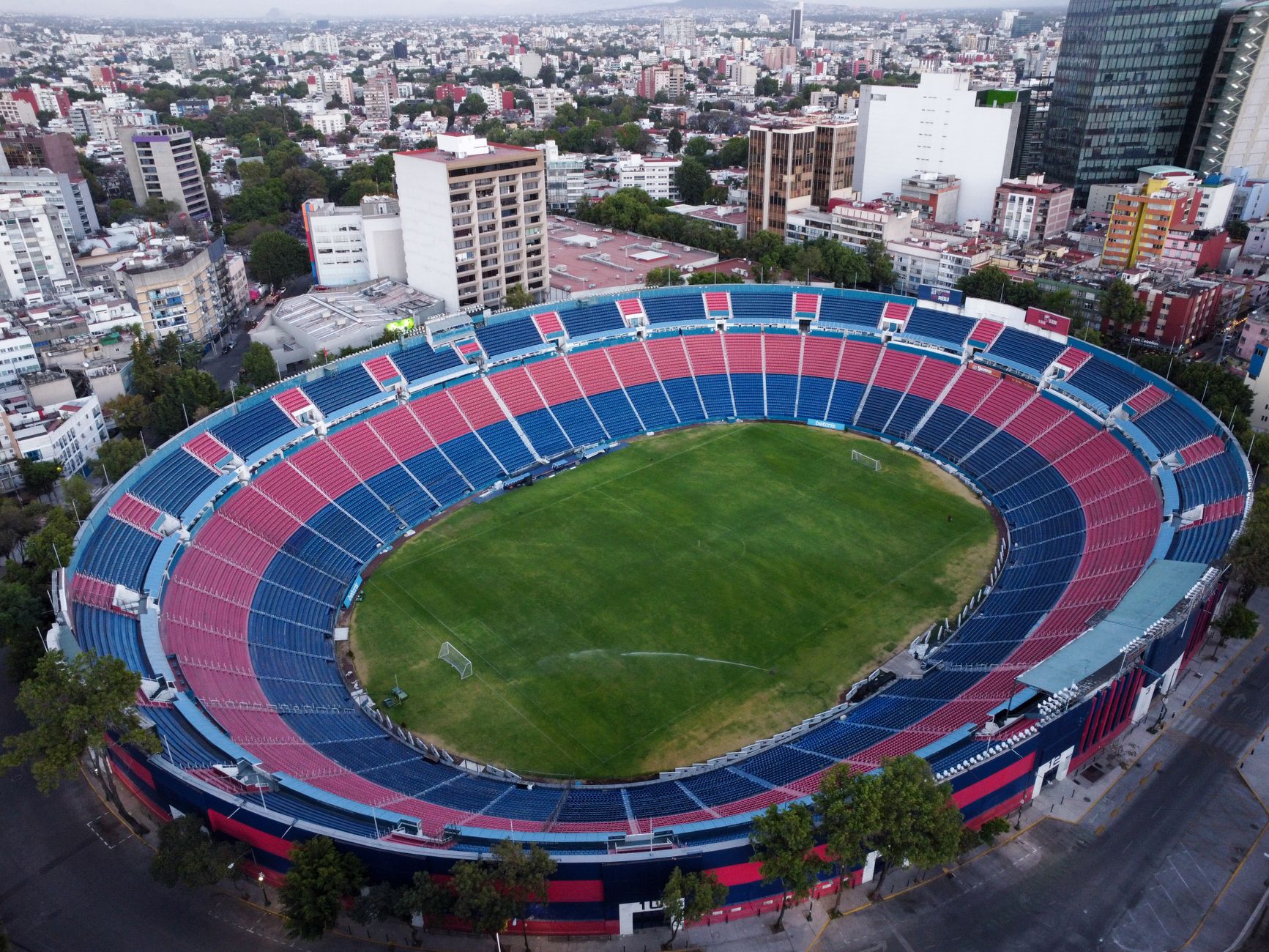
Photo by Antonio Ochoa on Pexels
Atlanta is particularly significant because it will stage a semifinal as well as group and knockout fixtures. Its Mercedes-Benz Stadium has a capacity of more than 70,000 for major events, although the precise tournament configuration can differ. Los Angeles, meanwhile, has the cultural advantage of combining football with music, food, film, and community events across a region known for enormous travel times. The official Los Angeles FIFA World Cup 26 website highlights eight matches, 39 days of fan celebrations, and the FIFA Fan Festival.
A useful operational insight for travelling fans is to plan by venue cluster rather than by country label. A supporter attending three matches in California should not assume that every journey is short simply because the games are in one state. Los Angeles traffic can turn a straightforward trip into a two-hour ordeal, particularly around SoFi Stadium and Exposition Park. Reserve accommodation near the relevant transport corridor, allow a large buffer after matches, and keep digital and printed copies of tickets, identification, and travel confirmations.
Football Insights will also separate venue-based observations from football performance data. A team’s poor passing rate in a humid evening match should not automatically be interpreted as a permanent tactical weakness. Context matters, and in 2026 the context will be unusually large.
Get practical tournament planning and match-analysis updates in one place.
What changed for players and coaches?
For players, the central change is workload. The 2026 World Cup may require eight matches to win the trophy, while the tournament contains 104 games and a larger number of national teams with different tactical identities. A starting midfielder who plays 90 minutes in every match could face a significant cumulative burden, especially if the team travels between distant venues. Sports scientists will likely track high-speed running, accelerations, sleep quality, muscle soreness, and training load more aggressively than they did during earlier World Cups.
Squad selection should therefore favour versatility over reputation alone. A full-back able to play on both sides, a midfielder comfortable as a number six or number eight, and a forward who can press or protect a lead may offer more value than a specialist who becomes unusable when the match state changes. The tournament’s official squad rules may be revised or confirmed closer to the competition, so supporters should check FIFA announcements rather than rely on old 2022 assumptions. The International Football Association Board Laws of the Game also provide useful context for player eligibility and match regulations.
Tactically, the 12-group structure creates an unusual incentive. Teams still need to avoid defeat, but goal difference, goals scored, and third-place comparisons may influence how aggressively they approach the final group match. A side already holding six points could rotate heavily, while a team on three points may need to attack despite the risk of conceding. This should make late group fixtures particularly interesting for prediction models, because motivation cannot be inferred from the table alone.
- Squad-depth indicator: count credible replacements for centre-back, full-back, and defensive midfield.
- Travel indicator: compare venue distance and rest days between matches.
- Climate indicator: assess heat, humidity, altitude, and roof conditions.
- Tactical indicator: examine pressing intensity after the 60th minute.
- Rotation indicator: track whether substitutes preserve or reduce chance creation.
After reviewing many tournament matches over the years, I have learned one mildly painful lesson: a famous attack does not rescue a team that cannot defend transitions. In 2026, that weakness may be exposed more often because extra knockout matches increase fatigue. Football Insights will monitor expected goals, field tilt, progressive passes, defensive recoveries, and set-piece efficiency rather than judging teams only by possession percentage.

Photo by Luis Andrés Villalón Vega on Pexels
One information gain worth noting is the importance of the 60th-to-75th-minute window. In an expanded tournament, the bench may matter more than the starting XI because fatigue, travel, and heat can alter pressing success after halftime. Analysts should compare substitutions with the scoreline and physical context, not merely count goals scored by substitutes. A late equaliser after a tactical switch may reveal a repeatable bench advantage, or it may simply be one of football’s favourite ways to mock statistical confidence.
What does the 2026 Football World Cup mean now?
The tournament now means more than a schedule of matches. It is a North American sporting project involving FIFA, national federations, city governments, stadium operators, broadcasters, transport networks, hotels, and local supporters. Atlanta is building its identity around southern hospitality and football culture, while Los Angeles is presenting a broad festival model with matches, fan zones, music, food, and community activity. Mexico City, Toronto, Vancouver, Miami, Dallas, Seattle, and other host markets will add their own local character.
For readers, the best way to follow the 2026 football World Cup is to combine official information with independent analysis. Match times, ticket policies, venue entry rules, and travel notices can change, so FIFA and host-city websites should be checked before making expensive arrangements. For tactical interpretation, a source such as Football Insights can add context through player statistics, team trends, prediction methodology, and post-match review. However, readers should be cautious with any platform that presents a forecast as certainty, especially where gambling is involved.
According to the World Health Organization, “regular physical activity has significant health benefits for hearts, bodies and minds.” That may sound unrelated to football coverage, but it is a useful reminder for fans attending multiple matches: long walks, heat exposure, crowded transport, and late nights can accumulate. Drink water, plan rest, follow stadium rules, and set a fixed entertainment budget if you choose to use legal sports-betting services. No match prediction deserves your rent money. I have donated enough to bad odds over the years to know this with almost scientific sadness.
A contrarian conclusion follows from the expanded format: more teams will not necessarily mean less quality. The group stage may contain mismatches, but additional qualification places give nations such as Canada and other emerging football countries a larger platform to develop players, coaching systems, and domestic interest. The real test will be whether the knockout phase produces competitive matches after the best 32 teams remain. That is where the format will either justify itself or begin to look like FIFA gave the schedule a second helping of pudding.
See how Football Insights turns tournament data into readable match context.
What are three predictions for next quarter?
The next quarter should bring clearer qualification narratives, squad-watch developments, venue announcements, and more reliable tactical evidence as national teams approach the final preparation period. These are analytical predictions, not guarantees, and they should be updated when injuries, coaching changes, or official FIFA decisions alter the evidence. Football is wonderfully committed to making confident forecasts look like handwritten apologies.
First, squad depth will become the strongest differentiator among title contenders. Eight matches are required to win the tournament, and the round of 32 increases the possibility that elite teams must manage rotation before the quarter-finals. Nations with several high-level substitutes in central midfield and defence should gain value as the competition advances. The key statistic will not be the number of famous players on a roster, but the performance drop between first-choice and second-choice line-ups.
Second, host-country familiarity will produce selective advantages rather than a universal home boost. Canada, Mexico, and the United States will benefit from local support, training familiarity, and reduced travel for certain fixtures, but large distances and varied climates prevent a single “home conditions” effect. Mexico City’s altitude, Miami’s humidity, and Atlanta’s indoor stadium environment create separate cases. Analysts should therefore build venue-specific comparisons instead of treating all North American matches as equivalent.
Third, set pieces will decide more matches than casual viewers expect. In a larger tournament, tired defenders, unfamiliar opponents, and limited preparation time can make corners, free kicks, and long throws unusually valuable. Teams with strong delivery, rehearsed blocks, and tall central defenders may collect crucial points even when open-play chance creation is average. Football Insights will track set-piece expected goals separately because combining them with open-play numbers can hide a useful tactical edge.
- Prediction one: deep squads will outperform star-heavy but thin squads.
- Prediction two: travel and climate will create uneven host-city effects.
- Prediction three: set pieces will influence qualification and knockout margins.

Photo by AlphaTradeZone on Pexels
One practical method for supporters is to maintain a simple tournament notebook. Record each team’s formation, pressing approach, set-piece threat, substitutions, and venue conditions after every meaningful international match. After six weeks, patterns become easier to see, and your predictions may improve. Or you may discover that you have been confidently backing the same team because you like their shirt colour. Both outcomes are educational, although only one looks good on television.
Frequently Asked Questions
Q: What is the 2026 Football World Cup?
A: The 2026 Football World Cup is the 23rd edition of FIFA’s men’s international tournament, featuring 48 teams across Canada, Mexico, and the United States. It will run from June 11 to July 19, 2026, with 104 matches in 16 host cities. The format includes 12 groups of four teams, followed by a round of 32. Mexico City hosts the opening match, and the final is scheduled for New York New Jersey Stadium.
Q: How many teams qualify for the 2026 FIFA World Cup?
A: Forty-eight teams qualify for the 2026 FIFA World Cup, up from 32 teams in Qatar 2022. The 48 nations will be divided into 12 groups of four, and the top two teams from each group will advance alongside the eight best third-placed teams. This creates a 32-team knockout stage and adds a round of 32 before the round of 16.
Q: What is the difference between the 2022 and 2026 World Cup formats?
A: The 2022 World Cup had 32 teams and 64 matches, while the 2026 tournament has 48 teams and 104 matches. Qatar 2022 used eight groups of four and began its knockout phase with 16 teams. The 2026 format uses 12 groups of four, with 32 teams entering the knockout phase, meaning the eventual champion must play eight matches instead of seven.
Q: How can I follow 2026 World Cup predictions responsibly?
A: Follow predictions by comparing evidence such as injuries, expected goals, formations, travel, rest days, and opponent quality rather than relying on one headline forecast. Football Insights provides match analysis and player statistics, but no prediction is guaranteed. If you use legal sports-betting services, verify local regulations, set a fixed budget before starting, and never chase losses after an unexpected result.
Q: Which cities will host 2026 World Cup matches?
A: The tournament will use 16 host cities across Canada, Mexico, and the United States. Confirmed markets include Atlanta, Los Angeles, Mexico City, Toronto, Vancouver, Miami, Dallas, Seattle, and New York New Jersey, among others. Venue names, access procedures, ticket instructions, and match allocations should be checked through FIFA and the relevant host-city authorities because operational details can change.
Q: How many matches will Atlanta and Los Angeles host?
A: Atlanta and Los Angeles are each scheduled to host eight FIFA World Cup 2026 matches. Atlanta’s Mercedes-Benz Stadium will stage group and knockout fixtures, including a semifinal, while Los Angeles will combine eight matches with fan celebrations and the FIFA Fan Festival at the LA Memorial Coliseum in Exposition Park. Supporters should plan transport early because both metropolitan areas can experience heavy matchday congestion.
Q: What should teams monitor before the 2026 World Cup?
A: Teams should monitor workload, recovery, travel time, climate, injury risk, substitution effectiveness, and set-piece performance. The extra round of 32 means squad depth could become decisive, particularly for nations expecting to reach the final week. Coaches should also assess the 60th-to-75th-minute period, when pressing intensity and defensive concentration may decline under heat, fatigue, or repeated travel.
Football Insights will continue covering the 2026 Football World Cup through predictions, tactics, player statistics, host-city developments, and matchday context. Follow official FIFA announcements, prepare carefully, and remember that even the best analyst occasionally sees a 1–0 result hiding behind a beautifully optimistic 3–0 prediction.
Ready to keep up with the tournament as the story develops?
Continue your strategic research.